Petra: WHEN WATER STOPPED OBEYING
Petra was a civilization raised to slow, divert, store, and domesticate an intermittent and ferocious enemy: water. Its greatness was born from that battle. So was its fall.

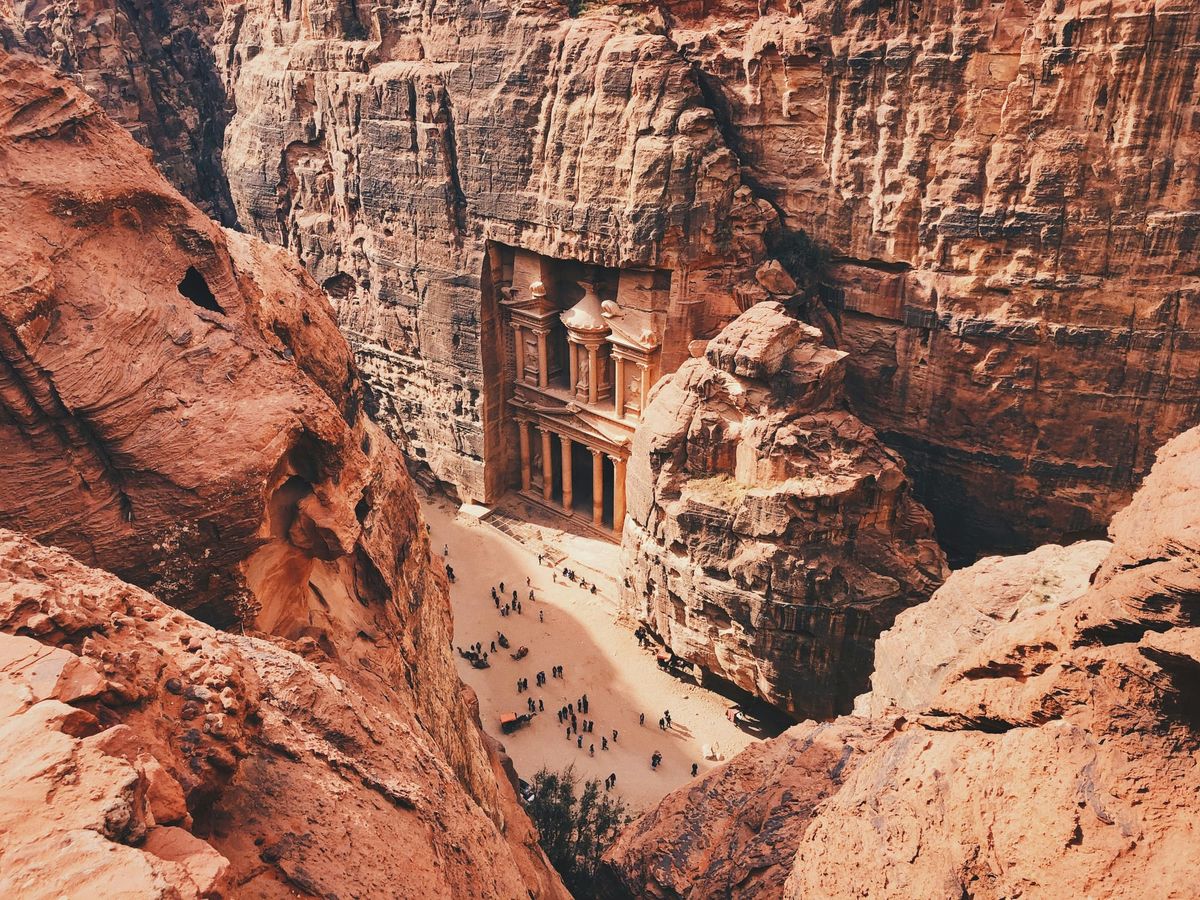
In December 2022, water entered Petra again the way a memory returns: as if it had never really left. It came down through the canyons, pushed mud ahead of it, rushed through narrow passages, and reached the steps of the Treasury, that perfect emblem of modern awe. There were evacuations. There was alarm. From the outside, the scene looked like an anomaly: climate erupting into a sanctuary of archaeology. But Petra knows something the visitor does not always grasp at first sight. Here, water is not an accident. It is the plot.
In May 2025, fresh heavy rains forced the evacuation of hundreds of visitors in the area, while the storm left deaths in the surroundings of Petra. It was not the first time. It will not be the last. The region carries a tragic memory of flash floods, some of them fatal, and the entire city was conceived in dialogue with that danger. Not in a metaphorical dialogue, but a physical one. Petra rose inside a basin of rock, among gorges, wadis, and seasonal torrents, in a landscape where water can vanish for months and then, when it finally arrives, destroy in a few hours what seemed eternal.
The essential paradox of Petra is not that it flourished in the desert. It is that it flourished in a place where survival depended on controlling, at the same time, scarcity and violence. Every useful drop had to be stored, every destructive surge had to be held back. Rain had to be turned into reserve, and torrents into obedience. A city had to be built that could withstand both thirst and flood.
That is Petra’s deep story. Not the story of a lost city. The story of a hydraulic city. The story of a capital built, quite literally, against water.
If you only know Petra as the Treasury, start here
➢ Petra depended on controlling both drought and flash flood
➢ Its hydraulic system mattered more than its visible monuments
➢ Its decline was also a systems failure
The city misread
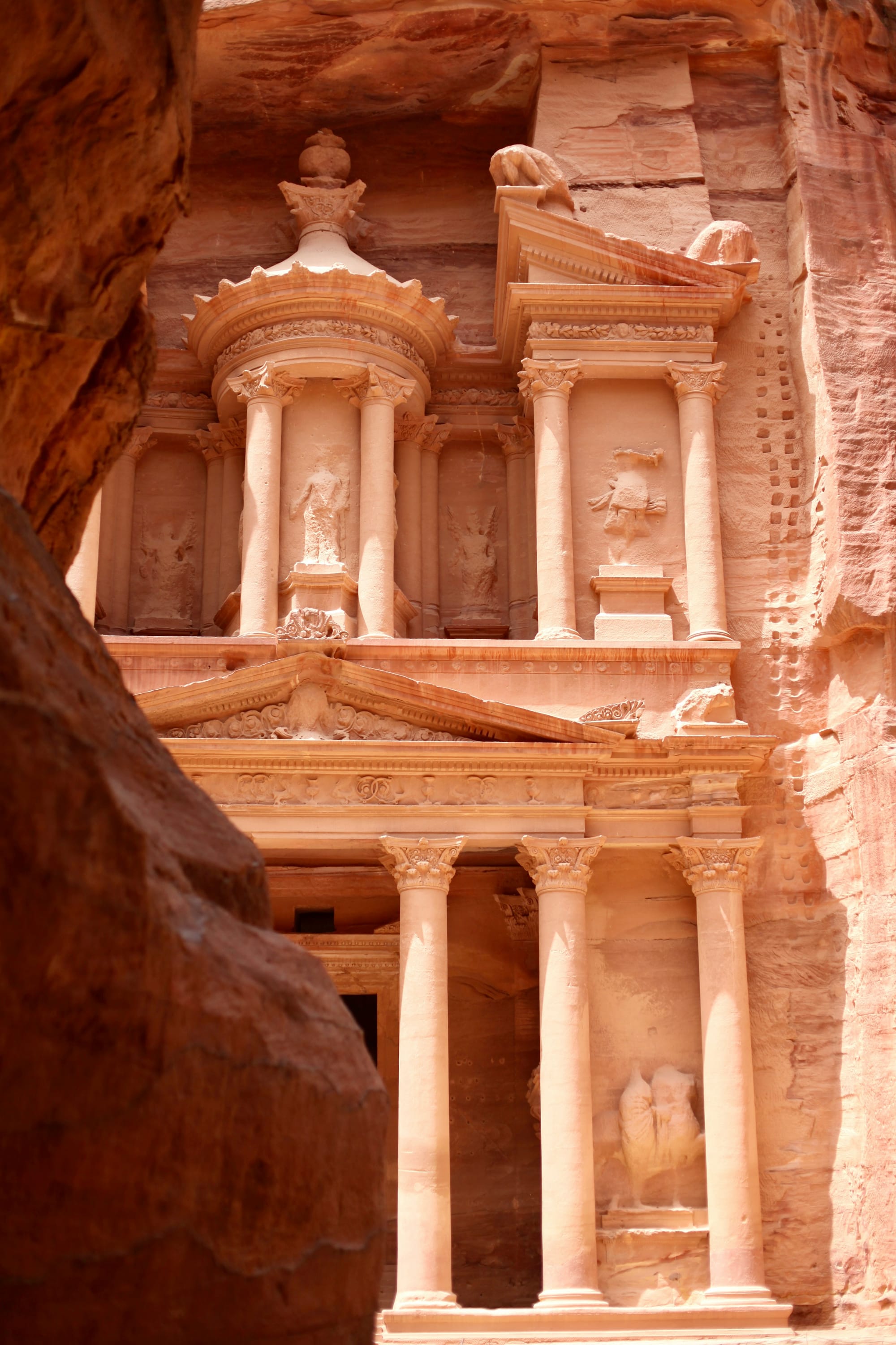
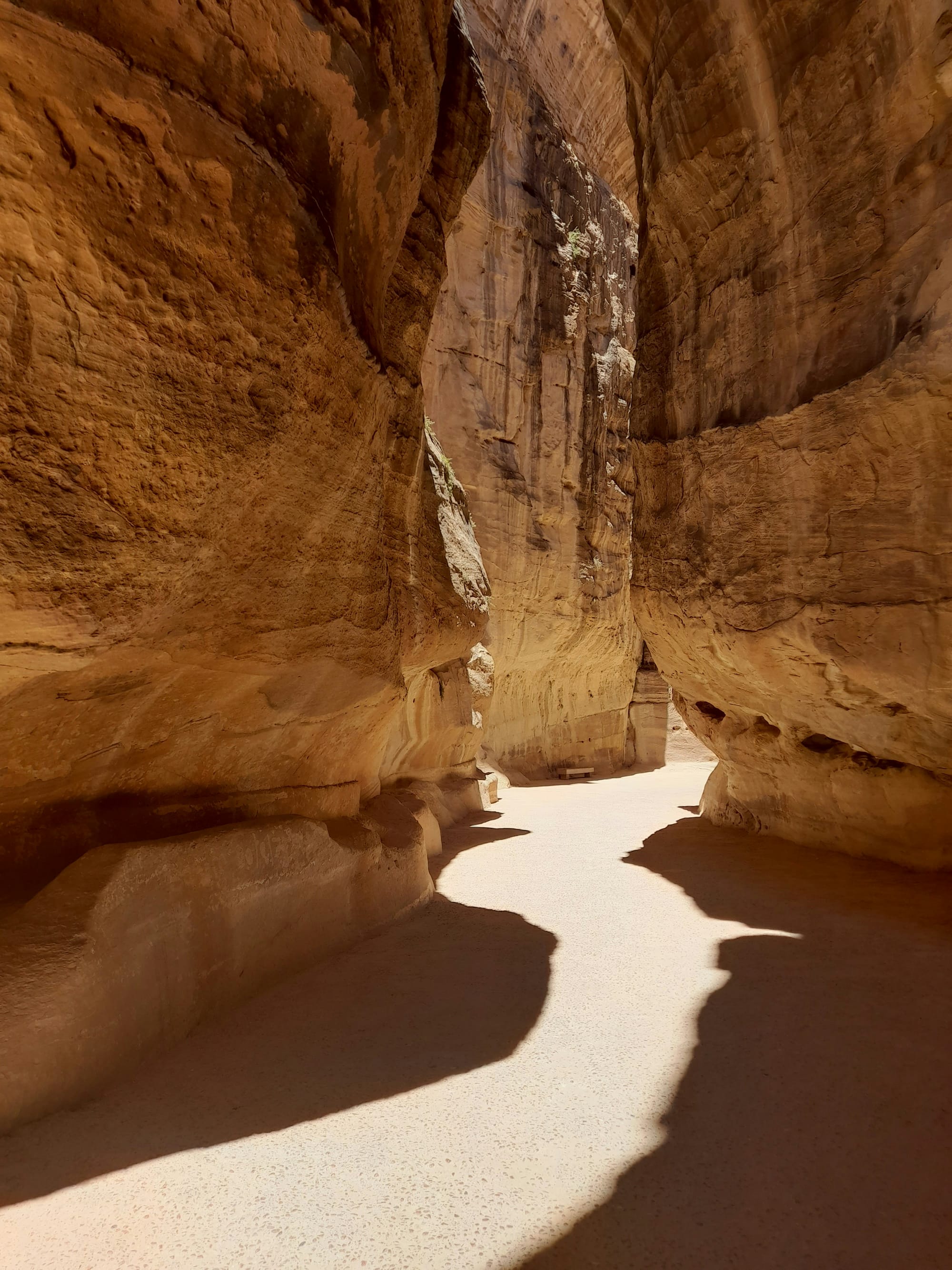
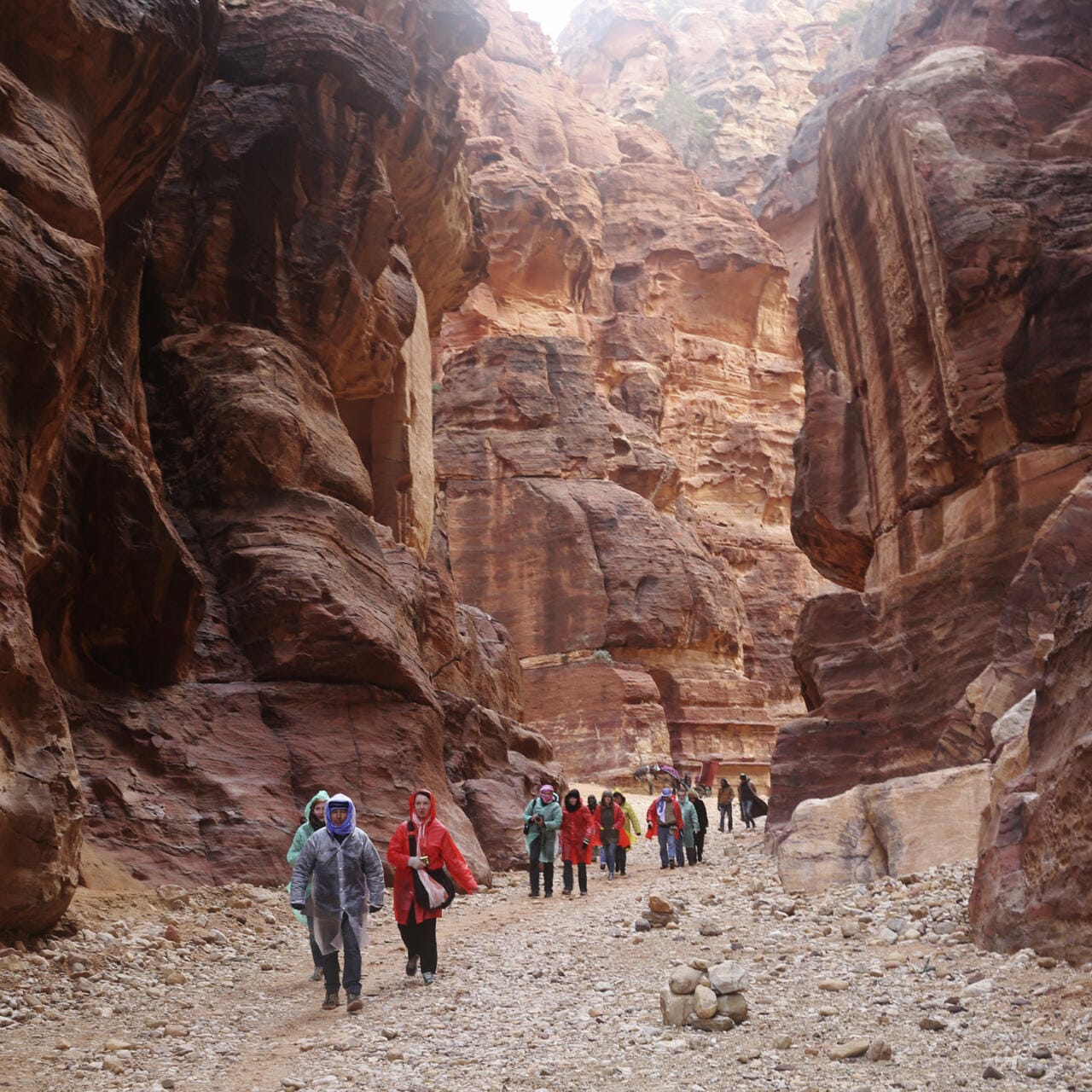
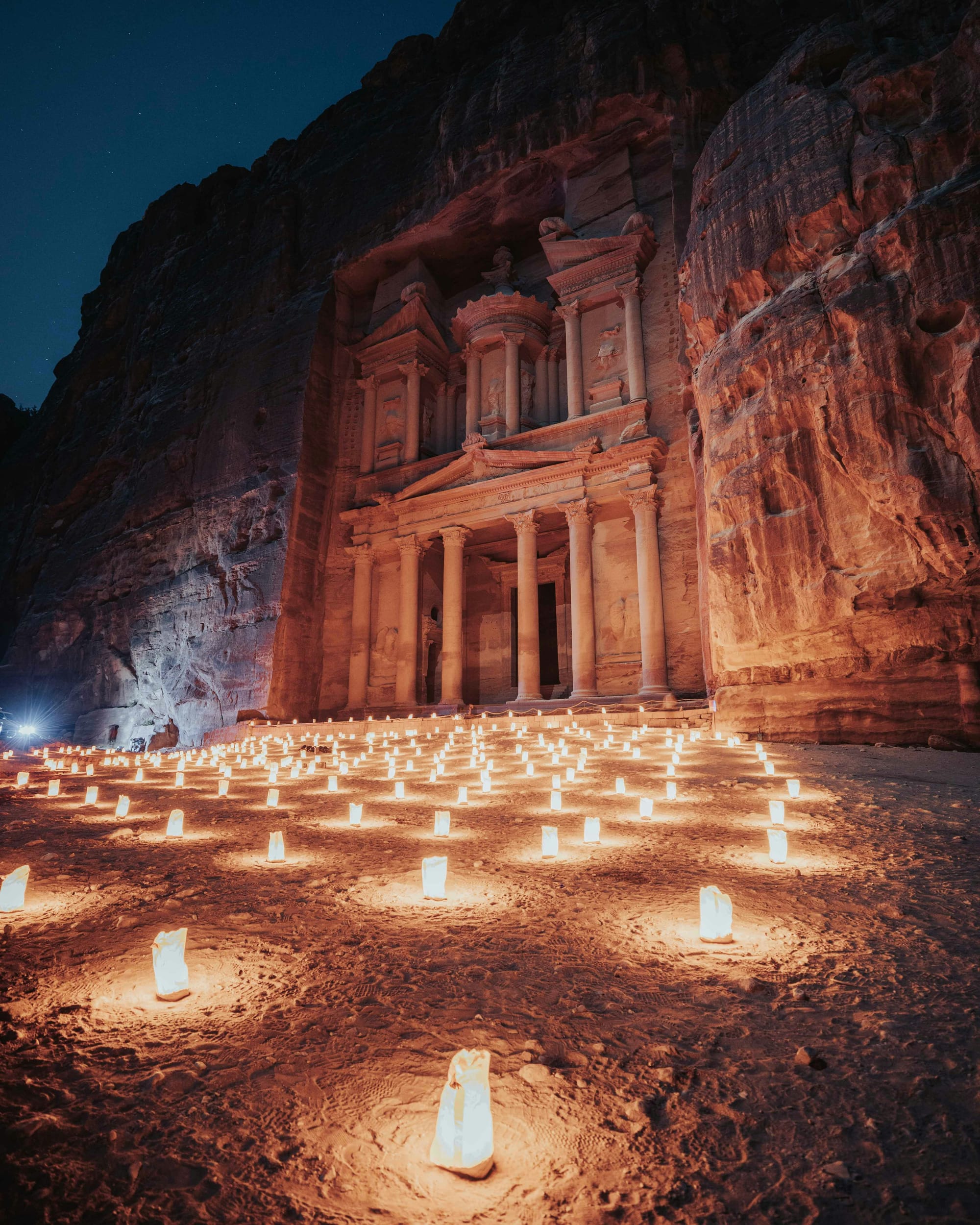
For two centuries, Petra has been told mostly through visual fascination. You arrive through the Siq, that narrow, winding gorge that seems designed to ration suspense; you walk between red, orange, ocher walls, polished by time and erosion; and then, in an opening timed like a stage cue, the Khazneh—the Treasury—appears. The effect remains devastating. Even those who have seen a thousand photographs feel there a primal form of astonishment. Stone becomes apparition. Architecture seems to emerge from the cliff as though the landscape itself had dreamed it.
That first impression has governed the reading of the place for too long. Petra became fixed as a monumental city, a carved wonder, an emblem of Nabataean sculptural genius and the archaeological exoticism of the Near East. The travel industry reinforced that gaze. So did cinema. So did a certain Western imagination, always seduced by what it can call a “lost city,” a “hidden treasure,” a “desert mystery.” All of that belongs to the site’s magnetism, but none of it fully explains it.
Because Petra cannot truly be understood by looking only at what rises into view.
The city lies in southern Jordan, in today’s Ma’an Governorate, embedded in a mountainous region cut by dry channels that can suddenly become violent streams. It is carved into soft sandstone, exquisite and vulnerable. The terrain protects it from human enemies, but exposes it to an older, more patient one: the logic of water in an extreme landscape. Here it was not enough to build temples, tombs, or streets. The behavior of the territory itself had to be rewritten.
That was the Nabataeans’ real talent.
The Nabataeans did not inherit a generous oasis. They manufactured one. They did not receive a ready-made city. They made one possible. Theirs was a nomadic or semi-nomadic culture, hardened by the desert, expert in reading terrain, managing scarcity, and moving through hostile ground. When Petra consolidated itself as a capital and a commercial hub, that intelligence did not disappear. It became system. The great monuments are the visible face of that transformation. But the condition of their possibility lay below, beside, above, and within the landscape: in channels, dams, cisterns, reservoirs, diversions, terraces, tunnels, and conduits.
Petra was not a city that simply had water. It was a city designed around the problem of water.
Where others saw stone, they saw flow
Petra’s wealth is usually explained through its privileged position on the trade routes linking Arabia, Egypt, Syria, and the Mediterranean. Incense, myrrh, spices, silk, ivory, bitumen, pearls—luxury goods passed through it, giving the Nabataeans a strategic role in caravan commerce. Petra was a stop, a crossing, a customs point, a refuge, a display of power. Its prosperity, in that sense, was real and well earned.
But commercial geography alone would never have been enough.
Caravans need water. Markets need water. Elites need water. Workshops, animals, kitchens, crops, baths, gardens, ceremonial spaces: everything depends on water. A city of tens of thousands of people, raised in an arid region and within a fragile topography, could not survive on tolls or beautiful cliffs alone. It needed to turn hostile terrain into a manageable system.
That is the core of the story. Where the modern visitor sees mostly rock, the Nabataeans saw flow. Where we admire a dramatic entrance, they identified a zone of risk. Where we notice forms, colors, and reliefs, they read gradients, pressure, accumulation, seepage, and the possible trajectories of water.
Petra’s genius did not lie in ignoring the landscape, but in understanding it better than anyone else.
Scarce, seasonal, sometimes violent.
Fast, concentrated, destructive.
Essential for survival in stone and drought.
The hidden basis of Nabataean power.
The city developed inside a natural network of runoff channels and canyons. Rains, scarce yet sometimes torrential, descended from the heights and could trigger flash floods of immense force. At the same time, long dry periods made it necessary to preserve and protect every reserve. The Nabataeans answered this double demand with an infrastructure of extraordinary precision. They cut channels into the rock, raised small dams, built tanks and reservoirs, designed protected cisterns, brought water in from distant springs, and deployed a distribution network whose logic was not ornamental but vital.
What matters is not merely that those works existed. What matters is their coherence.
These were not isolated pieces. They were a total vision. An entire city conceived as a hydraulic system.
The siq was not only an entrance. It was a defense
Few archaeological experiences are staged as theatrically as the approach to Petra through the Siq. One enters through a long, deep, twisting crack. Light filters in as though the gorge were rationing revelation. Each turn seems to push the visitor toward a visual climax. For centuries that passage has served to describe Petra’s dramatic power, its ability to impress the foreigner, the pilgrim, the merchant, the modern explorer.
But the Siq was not only a stage set.
It was, above all, a technical problem.
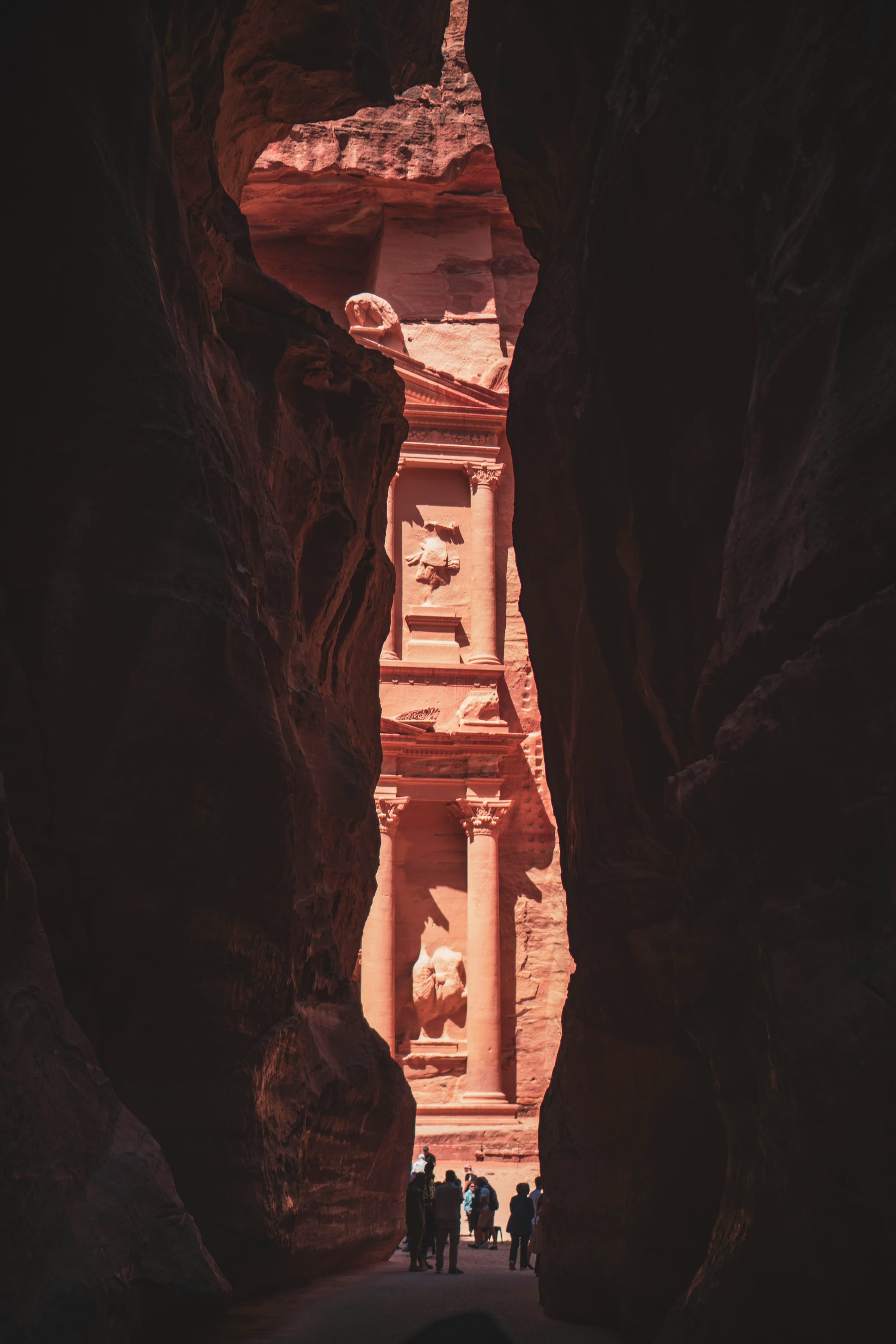
That narrow gorge, so photogenic today, could become a corridor of death when seasonal rains came down with force. Flash floods are not an abstract threat in Petra. They are a geomorphological fact. Water accelerates, concentrates, strikes the gorge, and descends with devastating power. The Nabataeans knew this. That is why along the Siq and at its approaches they deployed solutions to control the danger: dikes, diversions, lateral channels, conduits cut into the rock, tunnels meant to carry part of the flow away from the urban core.
This is one of the keys to rereading Petra. What looks like a ceremonial corridor was also protective infrastructure. The city’s grand entrance cannot be understood apart from water management. The route that leads to wonder today was, before anything else, one of the system’s critical points.
And perhaps here lies one of the Nabataeans’ most modern intuitions: they understood that urbanism begins not in the plaza or temple, but in the relationship to territorial risk. Petra could not afford innocent urbanism. Every access point was a vulnerability. Every slope, a variable. Every rainstorm, a test.
Channels more important than façades
There is one sentence that captures the entire shift in perspective Petra demands: its primary architecture was not the visible one.
The channels carved into the rock, some of them drawn with extraordinary precision, mattered more than many façades that now monopolize attention. The grooves, the gradients, the coverings, the joints between sections, the solutions devised to prevent loss, sediment, or overflow: that was the city’s nervous system. If one walks Petra following the logic of water rather than the logic of tourism, the hierarchy of the place changes completely. The famous monuments cease to be the sole center of attention. Other priorities emerge: traces of conduits, remnants of dams, points where architecture meets natural course, marks of erosion, protected cavities, cut reservoirs, secondary branches.
The invisible becomes primary.
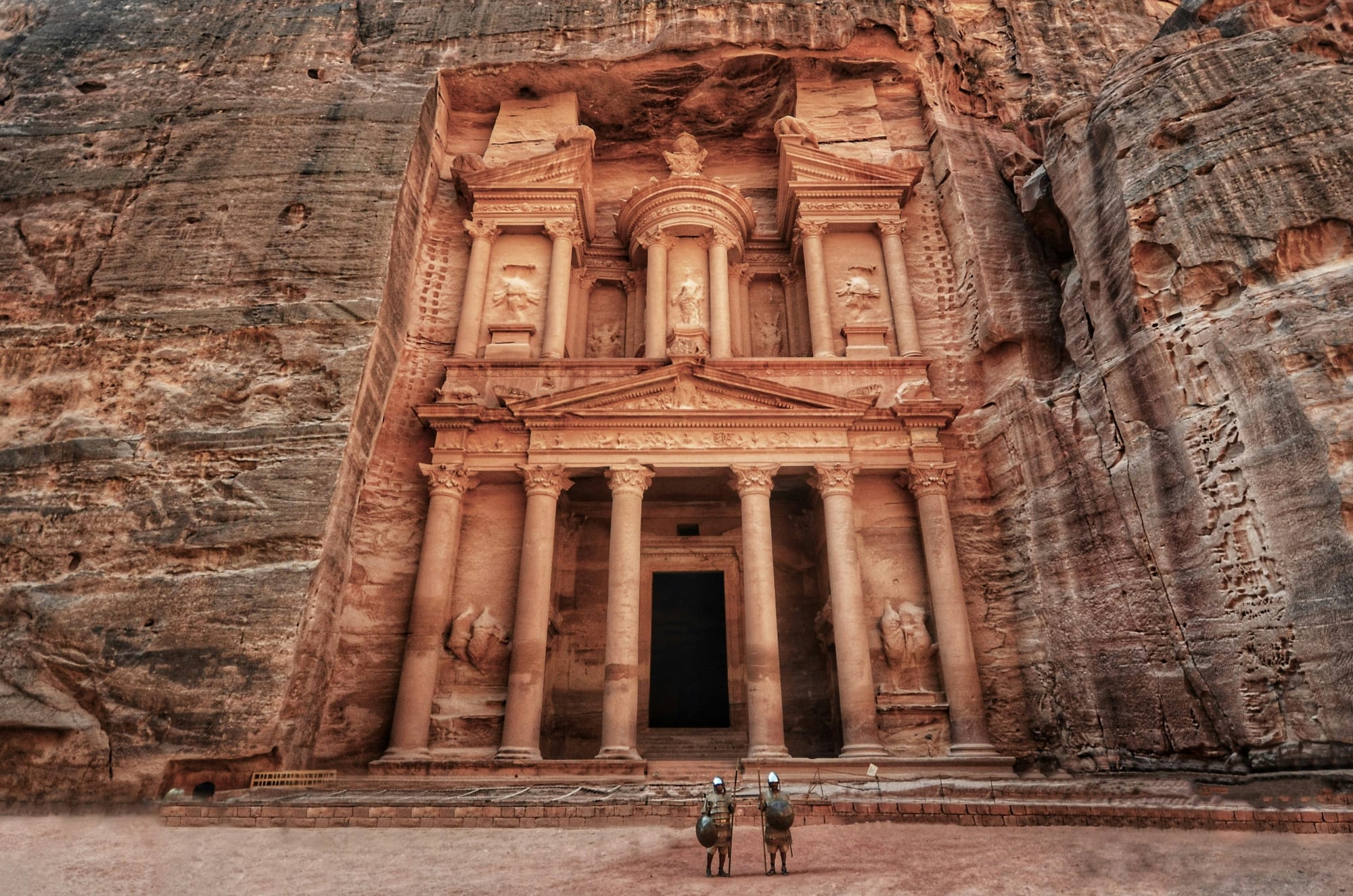
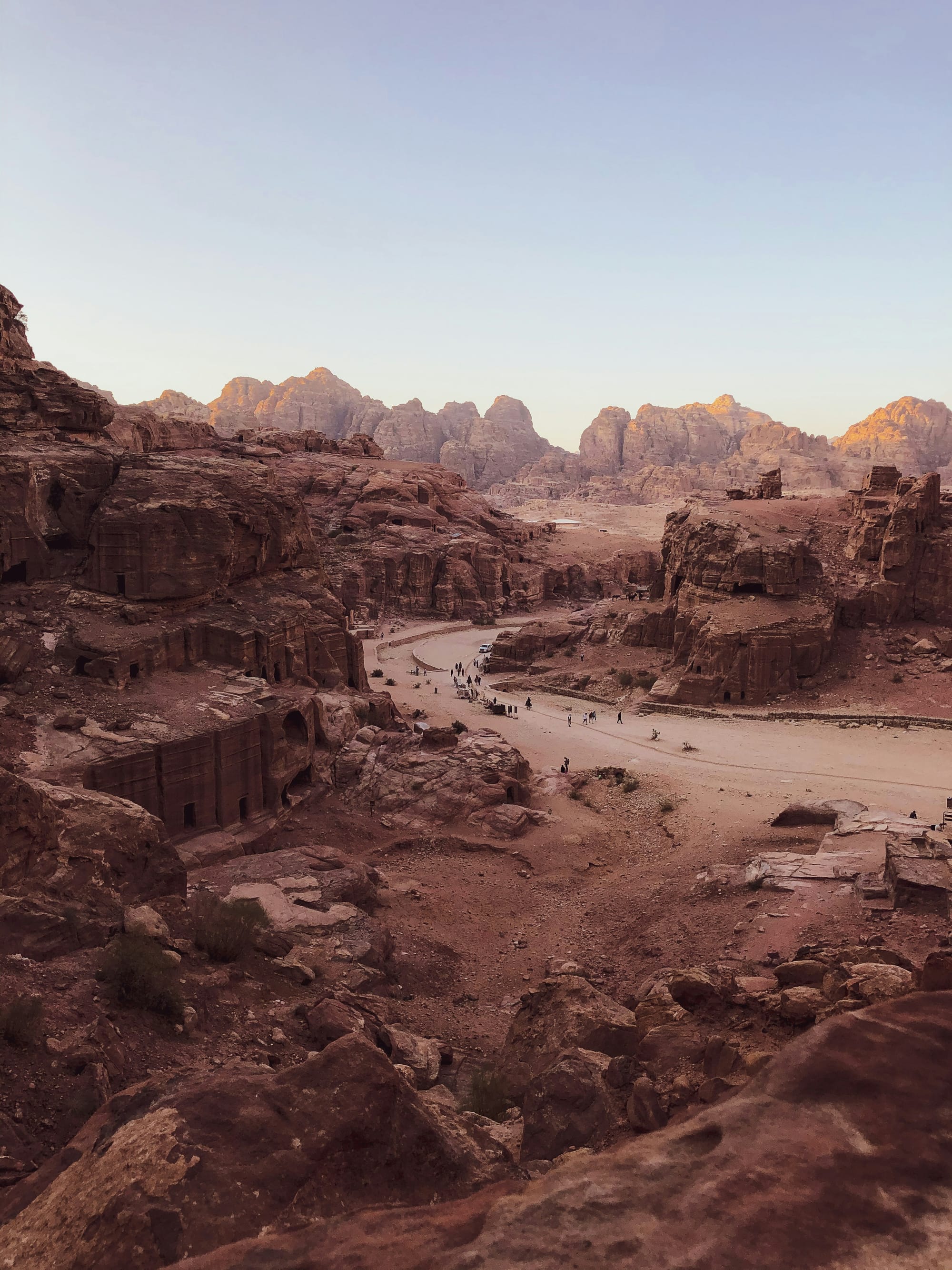
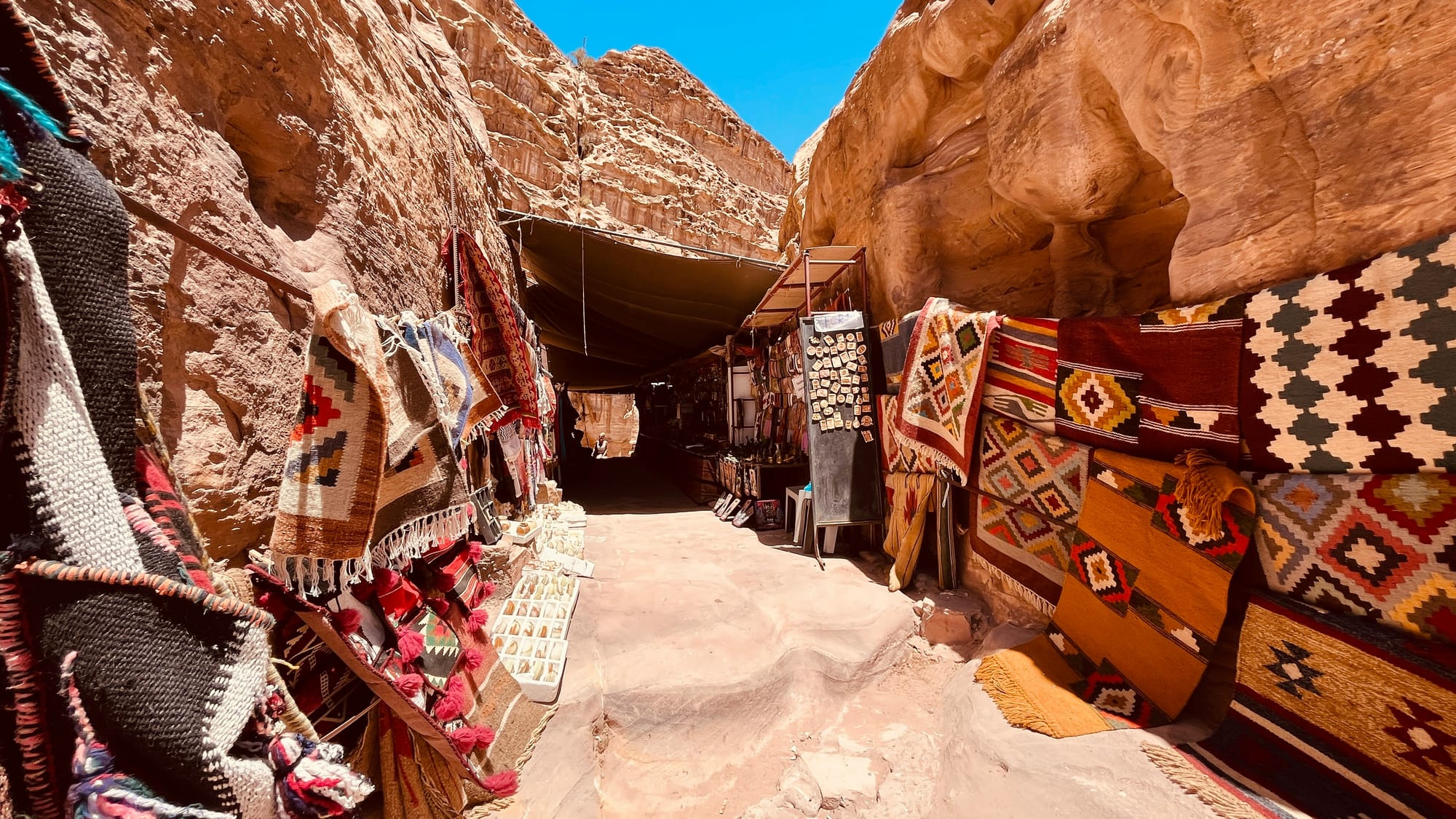
Petra’s hydraulic intelligence survives in fragments: grooves, conduits, and lines cut into stone with a discipline as exacting as any monument.
The Nabataeans exploited the very nature of sandstone to cut channels and tanks, but they did not rely on rock-cutting alone. They also used waterproof coatings, ceramic pipes, and in some cases remarkably sophisticated solutions. Water was carried by gravity wherever possible, but the system was neither crude nor rudimentary. It was hybrid, adaptive, attentive to relief. The city required continuity of supply, protection from evaporation, control of flow, and sufficient storage to endure the months of scarcity.
That effort turned Petra into something more than a settlement that endured. It turned it into a city capable of displaying abundance.
The luxury of water
There is something especially revealing about Petra: water was not used only to survive. It was used to impress.
The discovery of the monumental pool-and-garden complex in the center of the city altered the old image of an austere capital that merely outwitted thirst. There was something more ambitious here: a staging of control. A large pool cut into bedrock, a central island, a pavilion decorated with imported materials, a space designed for prestige, conversation, perhaps banquets. In the middle of a semi-arid landscape, water became political theater.
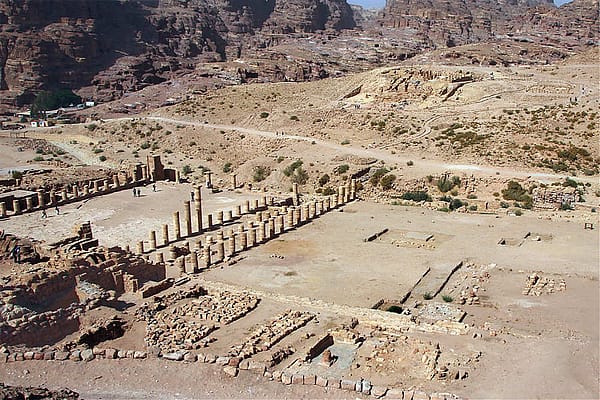
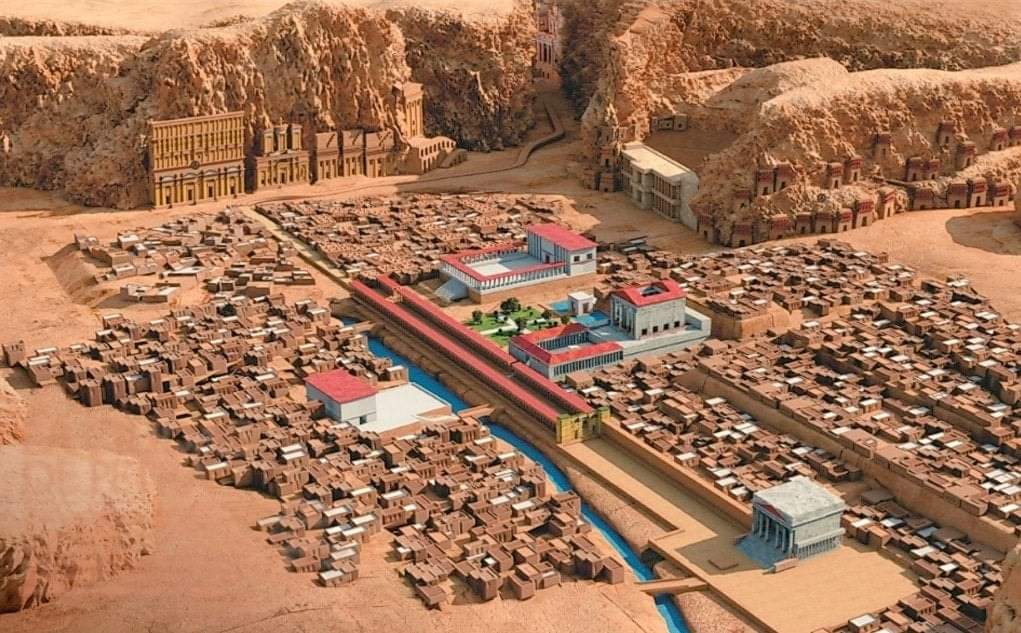
In Petra, water was not only survival. It became spectacle, prestige, and political theater.
This is not a minor detail. A civilization demonstrates its command over a resource when it ceases to devote it only to necessity and can begin to turn it into symbol. Fountains, nymphaea, gardens, elevated reservoirs, monumental spaces sustained by a steady flow: all of this indicated not only wealth, but organizational power. Water in Petra was survival, yes, but also representation.
In other words: Nabataean luxury did not rest only on spices arriving through trade. It rested on the ability to make the improbable visible. To display water where the landscape promised dryness. To make water audible where the desert imposed silence. To domesticate climate to the point where resource management itself became aesthetic experience.
That was one of Petra’s greatest assertions of power.
What water paid for in Petra
➢ urban continuity
➢ gardens and cultivated terraces
➢ fountains and public display
➢ elite prestige
➢ trade resilience
Cisterns for secrecy, not for the photograph
If monumental façades are the public side of the story, cisterns represent its intimate side. They are the least celebrated and yet the most decisive part of the system.
Cut, protected, sometimes sealed and covered, Nabataean cisterns were designed to preserve water, shield it from evaporation, limit contamination, and in some cases maintain a degree of strategic discretion. Petra’s water culture was not only monumental; it was also almost clandestine. Diodorus already mentioned the Nabataeans’ skill in hiding underground reservoirs filled by rain, marked in ways only they could recognize. The idea reveals something fundamental: in the desert, storing water is always a form of power and, at times, of secrecy.
These cisterns and tanks were not appendages. They were the city’s silent muscle. Captured water had to settle, be stored, be protected, and then be distributed according to the needs of the urban core. Some reservoirs were lined with waterproof mortars. Others took advantage of natural cavities or small rock shelters. The intelligence of the system lay not only in capture, but in protection after capture. In an extreme climate, loss was not an inconvenience. It was a structural threat.
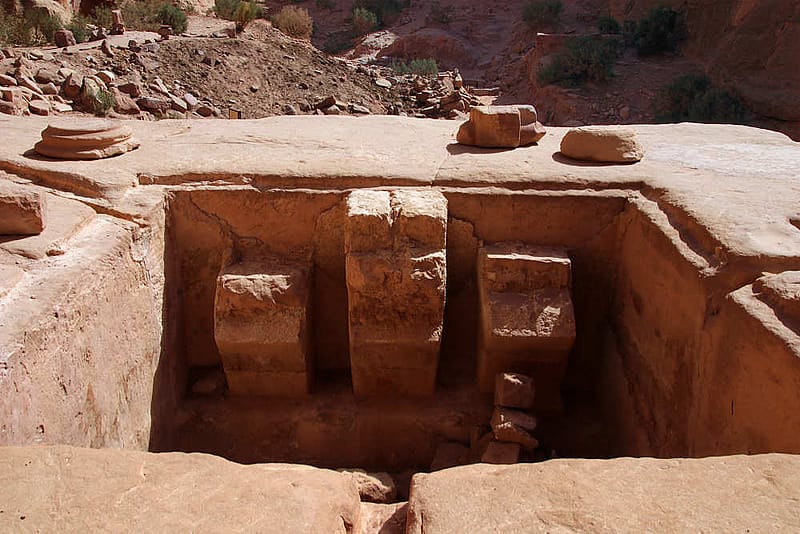
Petra understood this with radical clarity.
To read de rest of the article, join ETERNAL PULSE.
The discovery that forces a correction
For a long time, admiration for Petra coexisted with a certain technical underestimation. Its monuments were praised, its adaptation to the desert acknowledged, channels and cisterns were mentioned, but there remained a tendency to imagine its hydraulics as a notable yet pre-modern mix of empirical ingenuity and local improvisation.
Recent discoveries have made that view increasingly difficult to sustain.
Detailed study of a section of the ‘Ain Braq aqueduct showed that the infrastructure was more complex than had been assumed. It was not a single conduit, but at least two main branches. One carried water through terracotta pipes. The other left evidence of a pressurized lead conduit, around 116 meters long, probably integrated into an inverted siphon to overcome changes in elevation and supply specific reservoirs in the city, including those in elevated zones such as az-Zantur.
The finding matters for several reasons. First, because it demonstrates more sophisticated hydraulic planning. Second, because it indicates practical knowledge of pressure, continuity, and flow control in a topographically difficult environment. And third, because it compels a broader image of Petra: not only a city carved with mastery, but one conceived with technical finesse, capable of combining open and closed conduits, different materials, and solutions adapted to different functions.
What matters, however, goes beyond archaeological surprise. Discoveries of this kind dismantle a modern intellectual comfort: the tendency to admire ancient civilizations when they produce beauty and underestimate them when they produce technology. Petra forces us to abandon that condescension. What happened here was not inspired craftsmanship. It was high-level engineering in the service of an extreme necessity.
Maintenance as fate
Every hydraulic civilization shares one central fragility: it is not enough to build. One must keep building’s logic alive.
This is probably Petra’s harshest lesson. The system that made it possible could only function if someone inspected it, cleaned it, repaired it, and updated it constantly. Dams silt up. Terraces degrade. Channels break. Linings lose their seal. Reservoirs fill with sediment. Conduits suffer. Rain repeatedly rearranges the landscape. Without maintenance, water ceases to circulate as system and begins again to circulate as nature.
And in Petra, nature is implacable.
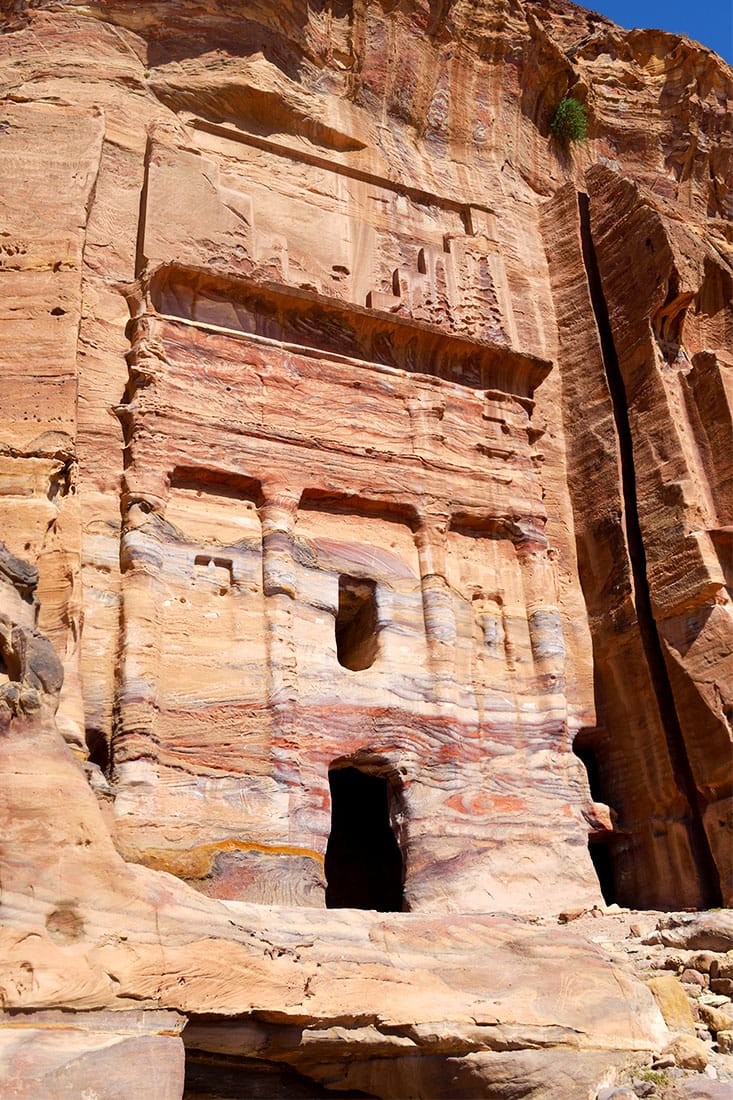
That is why erosion here should not be read only as the wear of time. It should be read as the document of failure. Blurred reliefs, surfaces eaten away by runoff, walls undone, channels rendered useless, accumulated sediment: all of it speaks less of a romantic ruin than of an abandoned infrastructure. Petra’s stone preserves a physical memory of the moment when water ceased to be governed.
It would be simplistic to reduce the city’s decline to that alone. Trade routes shifted. The economic center of gravity of the ancient world moved. Rome transformed the region. Earthquakes damaged buildings and networks. Occupation weakened over time. But in Petra all these causes converged in an especially cruel way, because they affected a city whose viability depended on an intensive and fragile technical system. Political or commercial decline could be gradual. Hydraulic loss of control was fatal.
It is no coincidence that part of Petra’s decline coincides with the deterioration and abandonment of its water infrastructure. Nor is it accidental that even the Romans understood the extent to which this network was the site’s Achilles’ heel. In Petra, cutting water was equivalent to cutting the city itself.
The return of water
What is most unsettling about Petra is that its story did not remain in the past. It is happening again, at another scale, under other conditions.
Climate change did not invent the site’s vulnerability, but it intensifies it. Droughts in the region are lengthening, heat waves are hardening, and episodes of violent rain capable of triggering flash floods are multiplying. At the same time, contemporary pressure on the landscape—urbanization, tourist infrastructure, impermeable surfaces, environmental transformation—alters the way water now moves through the basin. Where there was once absorption, agricultural terraces, and historical structures of slowing and retention, there is often now accelerated runoff.
That changes the speed of deterioration.
Conservation studies have long pointed out that salts, humidity, wind erosion, thermal oscillation, and environmental modification multiply the risks to Petra’s porous sandstone. The stone that made the city possible remains what exposes it as well. It absorbs, cracks, loses cohesion, suffers. Every extreme event leaves a mark. Every lapse in maintenance leaves another.
And yet the most promising response does not consist only in shielding Petra with contemporary technology. It consists in listening to it.
Local authorities and adaptation projects have begun to recover a decisive intuition: Nabataean solutions are not a relic. They are a toolbox. Ancient terraces, small dams, retention and diversion systems, community-based risk management, the logic of periodic maintenance—all of this can still have concrete value against flash floods. This is not nostalgia. It is the recognition that Petra contains an “ancestral wisdom” physically embedded in the terrain, a historical intelligence capable of speaking to sensors, alarms, and modern emergency protocols.
Petra’s present-day
➢ longer droughts
➢ stronger flash floods
➢ sandstone erosion
➢ salt crystallization
➢ pressure from tourism and altered runoff
Perhaps that is the most dignified way to preserve Petra: not to freeze it as scenery, but to reactivate the logic that sustained it.
The visible city and the necessary city
There are places where symbol devours structure. Petra is always at risk of becoming one of them.
Its fame is so vast, its image so powerful, that it is easy to reduce it to its most photogenic monuments. Visitors come seeking the Treasury and the Monastery, the Royal Tombs, the theater, the near-cinematic effect of the gorge. All of that matters. It would be absurd to deny it. But Petra’s true density begins when one understands that the visible city always rested on another, less spectacular and more decisive one: the city of systems.
Human history is full of similar examples. Empires represent themselves through palaces, temples, avenues, mausoleums, monuments. But they endure or collapse according to the quality of their networks: water, food, roads, maintenance, energy, the administration of the basic. Petra offers that principle with brutal clarity. Its monumentality is inseparable from its infrastructure. If one fails, the other becomes vulnerable scenery.
That may be why Petra matters so much today. Because the contemporary world, saturated with symbols, often seems to forget that civilizations are sustained not by their visible narratives, but by the quality of the silent systems that keep them standing. Water, logistics, energy, care of the territory, continuity of maintenance: this is where the real survival of societies is decided.
Petra knew that before we did. And it also knew what happens when that knowledge is interrupted.
What the desert preserves
There is a superficial way of reading Petra as a triumph of human will over a hostile environment. It is an appealing reading, but an incomplete one. The Nabataeans did not conquer the desert as one defeats an external enemy. They did something more intelligent and more difficult: they learned to live within its rules, to work with its rhythms, to exploit its violence without denying it. They did not “master” the landscape in any naïve sense. They negotiated with it. They calculated it. They diverted it. They used it in their favor for as long as they could sustain that conversation.
This explains Petra’s strange moral beauty. It is not only an aesthetic wonder. It is also a lesson in technical humility. The city was born not from abundance, but from limit. And precisely for that reason it still says something essential about the human condition. That greatness does not necessarily begin where resources abound, but where intelligence appears to manage scarcity. That splendor is not incompatible with precariousness, but it does depend on constant discipline. That even a city capable of turning desert into oasis can fall not when it loses its myth, but when it loses control over its critical systems.
Petra is a city of stone, yes. But above all it is a city of attention.
Attention to slope. To mud. To the eroded dam. To the clogged channel. To the sealed cistern. To the distant spring. To the brief rain. To the sudden surge. To annual repair. To infrastructure that goes uncelebrated while it works. To that patient labor, almost always without epic language, that makes it possible for a capital to exist in a place where nature seemed to have said no.
The final echo
That may be why Petra’s great symbol should not be only the Treasury appearing at the end of the Siq. It should also be another image, less famous and more true: water descending once again along paths it had already known, reclaiming a geography it had never ceased to recognize as its own.
When the system worked, Petra turned that impulse into city. It slowed it, divided it, concealed it, stored it, even lifted it into gardens and pools where power could contemplate itself reflected. When the system weakened, water became again what it had always been: a force without sentiment, incapable of admiring monuments.
That is the great question Petra leaves suspended between its cliffs: not who built it, nor who rediscovered it, nor how many secrets still lie buried beneath the sand, but what happens when a civilization ceases to care for the things that made it possible.
The answer is written everywhere, though it is rarely the first thing anyone sees. In the grooves of the rock. In the marks of erosion. In the ruined dams. In the hidden cisterns. In the mud that sometimes returns to the feet of the Treasury.
Petra is still there, dazzling and wounded, monumental and fragile, admired by millions and threatened by the very force that made it possible. And perhaps that is its most contemporary truth: it does not represent the eternity of stone, but the precariousness of everything human when it forgets that beneath its symbols there always beats an invisible network on which everything depends.
Petra did not begin to fall when it lost its beauty. Petra began to fall when water stopped obeying.
 ETERNAL PULSE
If you've made it this far, you belong here. Suscribe to receive our next investigations.