Versailles: THE PALACE OF SUBMISSION
Louis XIV did not build a palace outside Paris in order to live better. He built a machine of power: a dazzling stage designed to watch, seduce and domesticate the French nobility while turning absolutism into a form of landscape.


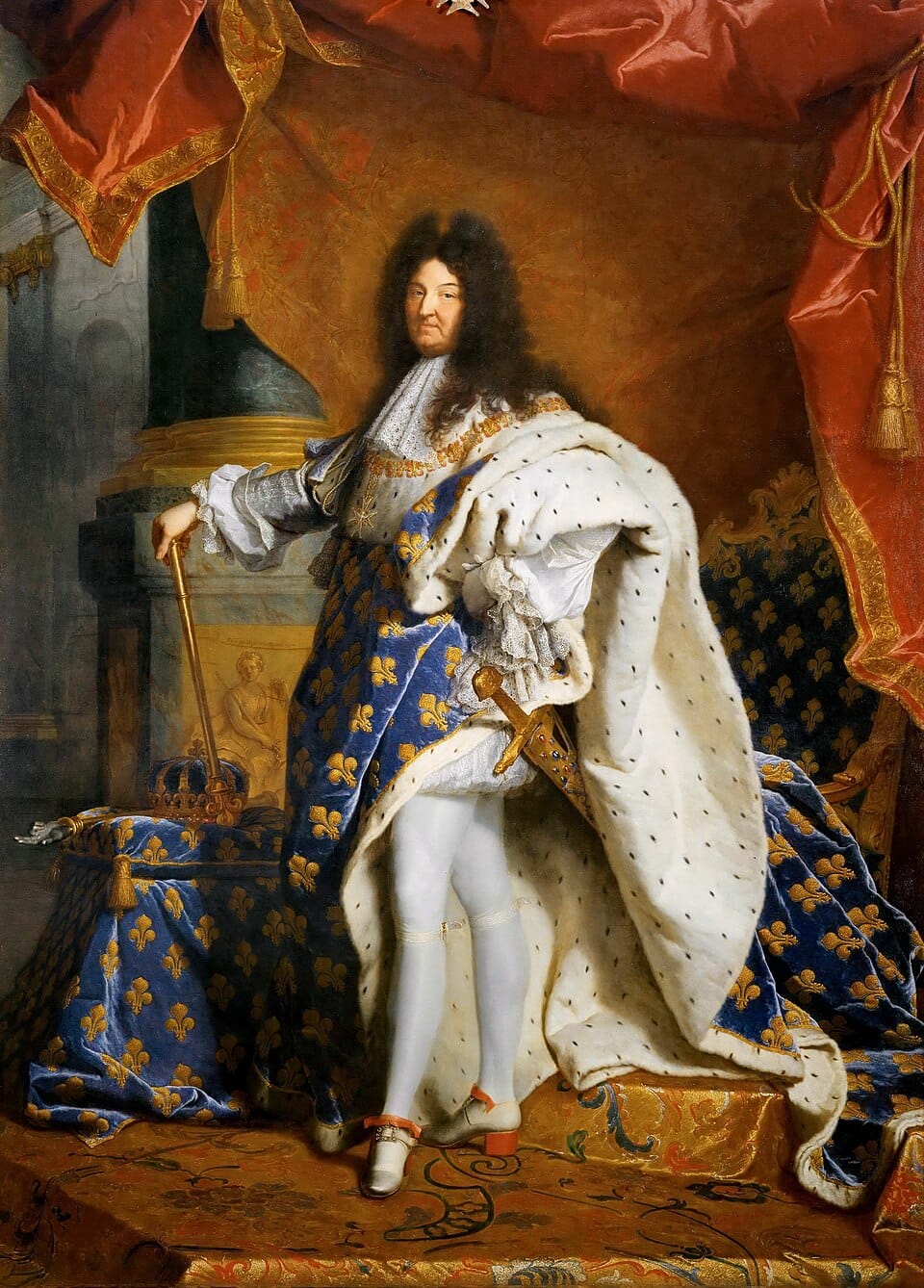
At half past eight in the morning, when France was only just beginning to stir, the king’s day had already become ceremony. A valet de chambre would lean beside the bed and utter the ritual phrase: “Sire, it is time.” From that instant on, nothing fully belonged to intimacy. Doctors entered, then surgeons, chamberlains, nobles entitled to be present, officers of the Crown. Curtains were drawn back, the holy-water stoup was brought forward, a wig was chosen, a shirt was presented with the gravity of an insignia. In that room one did not witness a man waking up, but an institution being set in motion. The king rose, yes, but above all he displayed himself; and in displaying himself, he ruled.
Versailles began each day like this: as a choreography of obedience, a meticulous theatre in which every gesture, every access, every glance had political value. Those who stood there had not come merely to look upon the monarch. They had come to locate themselves on the invisible map of power, to measure their nearness, to contest a privilege, to confirm that in France even the sovereign’s most trivial act could become a matter of state.
For centuries, France’s most famous palace has been regarded as a monument to excess. And at first glance, the image invites that reading: gilded rooms, endless mirrors, gardens drawn with almost inhuman precision, fountains, marble, sculpture, avenues opening as if the horizon itself had been corrected by royal will. All of that is true. But it is not enough. Because at Versailles, luxury was not the ultimate end. It was the language. The brilliance, the wrapping. The palace’s true masterpiece was not decorative but political.
Louis XIV did not simply erect a royal residence outside Paris. He erected a machine of power. A building conceived not only to be inhabited, but to govern; not only to impress, but to order; not only to dazzle Europe, but to domesticate those who for generations had challenged the authority of the Crown. Beneath the gold, the mirrors and the symmetry lay a far more ambitious idea: to use space as an instrument of command and to turn architecture into a form of obedience.
The king turned into ceremony
At Versailles, etiquette was not an ornament of court life, nor a mere Baroque extravagance. It was a technology of power. The lever—the monarch’s public awakening—the Mass, the council, the meal, the walk, the evening gatherings, the nightly coucher: every segment of the day was subjected to a precise liturgy, repeated with almost mechanical exactitude. Saint-Simon barely exaggerated when he claimed that, with a clock and an almanac, one could know from hundreds of miles away what the king was doing at any given moment. That regularity did not answer only to Louis XIV’s taste for order. It served something deeper: it turned the sovereign’s existence into the kingdom’s great clock. Everything began in him. Everything returned to him.
Yet what mattered was not only the visibility of the king, but the visibility of those around him. To be present at the petit lever or the grand lever, to have the right to approach the bed, to present a shirt, to hold a candlestick, to attend Mass a few paces from the monarch, to accompany him on his walks or be admitted to the evening entertainments in the apartments—these were not decorative gestures. They were signs of rank. At Versailles, power was measured not only in titles, revenues or estates, but in physical distance: in the number of steps separating a man from the king’s body.
Today it may seem theatrical trivia, a collection of empty rituals from an extinct world. In its own time it was a disciplinary structure of extraordinary sophistication. Every glance from the king could open a career or close it. Every access granted was a promise; every exclusion, a warning. Every favor glittered with honor, but also carried the weight of dependence. What was distributed at Versailles was not merely prestige: it was administered hierarchy, measured obedience, ambition turned into a system.
And here lay one of Louis XIV’s greatest political masterstrokes. By transforming his own life into spectacle, he forced the nobility to live in dependence on that spectacle. The court ceased to be merely the surroundings of power and became its finest instrument. The king did not need to remind everyone, at every moment, that he was the center of the realm. It was enough that all should compete, every day, to stand a little closer to him.
The fear born of the Fronde
To understand why Louis XIV wished to build this ordered, watched, almost mathematical universe, one must return to his childhood. Long before he became the Sun King, the future monarch was a child marked by fear. France had been dragged through decades of tension, war and financial exhaustion. The Thirty Years’ War had imposed crushing fiscal pressure; the country knew bad harvests, hunger, epidemics, displacement and a brutal inequality between the privileged and the common people. Against that unstable background broke out the Fronde, the series of uprisings between 1648 and 1653 in which parlements, great nobles and urban sectors challenged royal authority during the regency of Anne of Austria and the government of Mazarin.
This was far more than a political crisis. It was a founding wound. Paris rose up, barricades were built, the court fled, authority faltered. The child-king saw the fragility of the Crown at close quarters. He learned too early that the throne did not rest on some natural and unquestioned obedience, but on a precarious balance that could break. Above all, he understood something decisive: the nobility was not merely the ornament of power, its brilliant social scenery. It could also be its most dangerous threat.
The Fronde was defeated, but it never truly ended in Louis XIV’s memory. It left him with a conviction that would shape his entire reign. If the monarchy wished to survive, it would not be enough to crush the aristocracy militarily whenever it rebelled. It had to prevent it from ever gathering the energy to do so again. Its political nature had to be changed, its initiative hollowed out, it had to be separated from its bases of power, stripped of time, space, autonomy and even the habit of command.
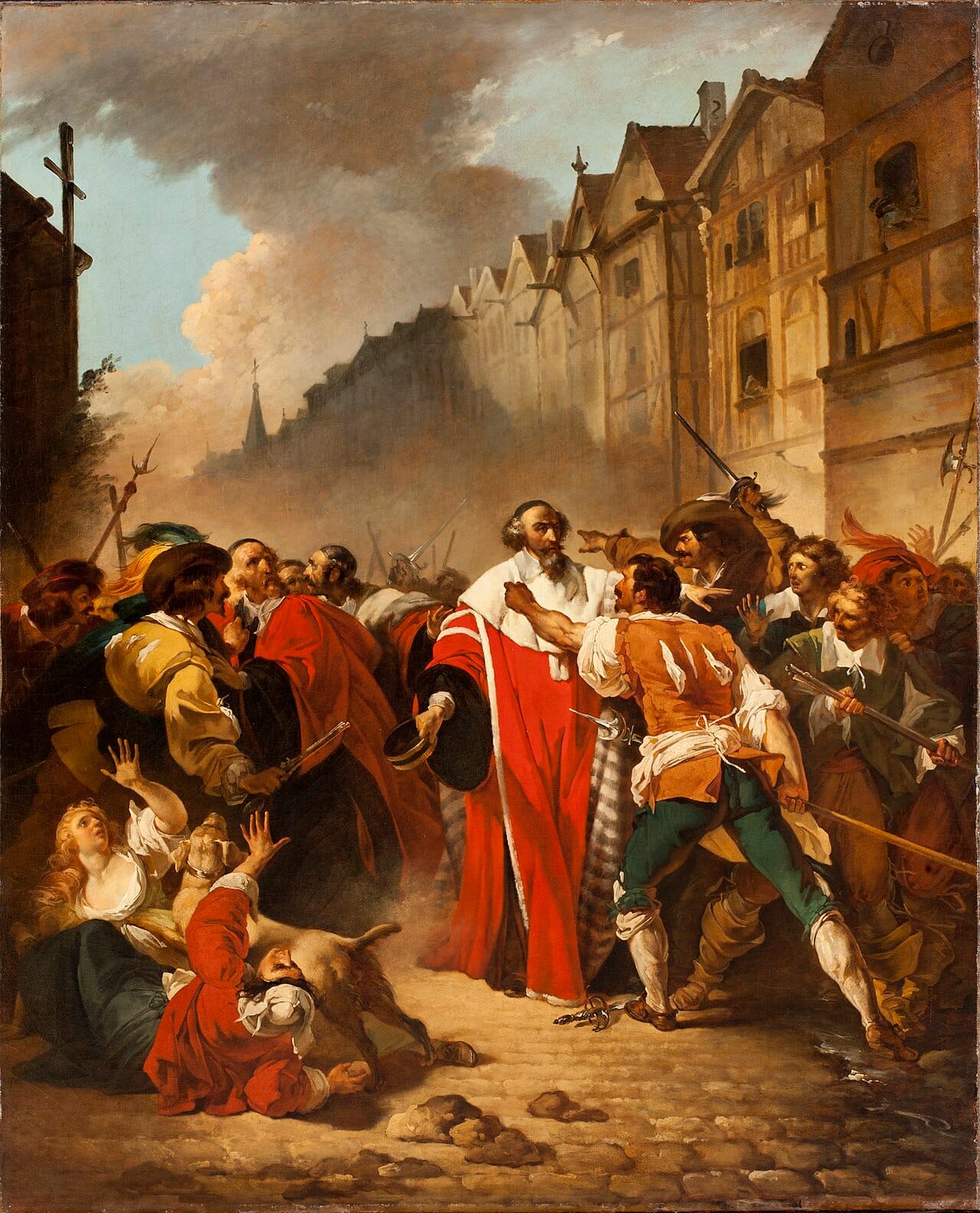
Louis XIV learned that lesson with the precision with which others learn a prayer. Versailles, years later, would become the monumental answer to that trauma: the architectural form of a childhood fear transformed into a system of government.
What was the Fronde?
The Fronde was a series of uprisings between 1648 and 1653 involving parlements, nobles and urban factions against royal authority during the minority of Louis XIV. For the young king, it became a lifelong lesson in the dangers of aristocratic rebellion.
Removing power from Paris
Paris was too many things at once. It was the city of history and commerce, of markets and corporations, of rumor, opinion and crowds. But it was also—and this weighed more than anything else—the city of insurrectionary memory. There the monarchy had felt the tremor of the Fronde. There royal power had discovered that it could be surrounded, challenged, humiliated. Louis XIV never stopped embellishing Paris or intervening in it with great public works, but he never wished to entrust it with the heart of his political system. The capital was too alive, too unpredictable, too burdened with memory. Versailles, by contrast, offered what Paris could not: control of the environment.
Some twenty kilometers to the west, Versailles was a far emptier, more malleable space, less subject to urban pressure, a territory in which the monarchy could impose not only its authority but its spatial logic. There was no historic city there to condition the king’s movements. Instead, there was the possibility of beginning almost from scratch and shaping the setting to fit a political idea.
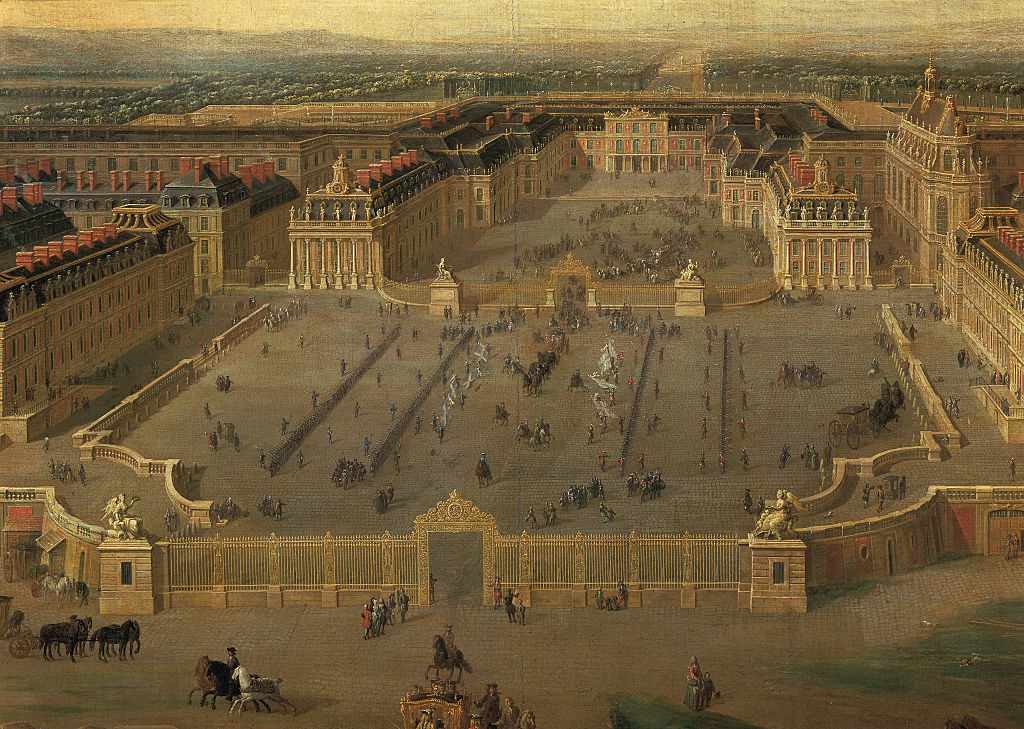
The starting point was, in appearance, modest. In 1623, Louis XIII had ordered a simple hunting lodge to be built there. His son transformed that almost intimate origin into the most ambitious architectural undertaking in Europe. From 1661 onward the great enlargements began. The former hunting retreat expanded into wings, courtyards, halls, gardens, dependencies and long axes of perspective until it acquired the scale of an entire universe. By 1682, when the transfer of the court and government to Versailles was consolidated, it was no longer simply a magnificent palace. It was a redefinition of power. France remained France, but its effective political capital had shifted.
The decision was colossal. For the first time, the exercise of absolute monarchy was identified so completely with a place raised expressly to exercise it. Versailles became the great relocation of absolutism. The king did not merely leave Paris: he removed from the city the nobility, offices, administration, ceremonial and opportunities. He drew the kingdom’s center of gravity with him and installed it in a space where he dictated not only the law, but also the décor, the rhythm, the distance, and even the atmosphere in which power was to be breathed.
A golden cage for the great men of France
Louis XIV’s political intuition was almost cruel in its lucidity: a nobility concentrated under the king’s eye was infinitely less dangerous than a nobility scattered through its provinces. For centuries, the great lords had preserved territories, clienteles, fortresses, military prestige, family networks, the capacity for alliance and, above all, a memory of resistance. They had been power before they became court. At Versailles, none of that disappeared entirely, but all of it was subjected to a new and stronger principle: court life as a form of domestication.
The nobles had to live near the king. They had to install themselves in the palace apartments or in the town that grew around it like a natural extension of the building. They had to attend, wait, petition, present themselves, be seen, remain available. And they had to spend. That seemingly mundane detail was one of the system’s decisive gears. To sustain at Versailles a rank worthy of one’s name required luxurious clothing, carriages, servants, dinners, gambling, gifts, wigs, lace, impeccable manners and an uninterrupted social presence. Splendor was not an accidental consequence of the mechanism: it was one of its most effective tools.
The aristocrat who ruined himself trying to live up to his condition found himself trapped in an ever greater dependence on royal favor. He needed pensions, offices, grants, revenues, concessions. And a dependent noble was a more docile noble. Where seigneurial autonomy had once existed, courtly need began. Where territorial power had once stood, anxiety appeared over losing one’s footing on the king’s stage.
The cage was made of gold, but it remained a cage.
Louis XIV did not need to imprison the aristocracy physically. It was enough to persuade it that the only truly noble life was the one lived under his gaze. To leave Versailles was, in large measure, to erase oneself. To be far from the king meant losing influence, offices, news, revenues, chances of advancement. The great lords, who for generations had proudly defended their independence, learned to beg for invitations, monitor precedence, dispute access and read the sovereign’s mood as one studies the sky before a storm. What had once been an elite capable of challenging the throne was slowly becoming an aristocracy dependent on the gesture, the favor and the permission.
Competing for a glance
The most effective part of the system was not merely gathering the nobility into one place, but forcing it to turn upon itself. Louis XIV understood that an aristocracy occupied in watching its neighbor was an aristocracy far less dangerous to the throne. And that is precisely what he achieved. Instead of organizing rebellions, the nobles began organizing appearances. Instead of weaving great territorial or military alliances, they wove small strategies of visibility. Instead of confronting central authority, they spent their energies in an endless war of precedence, access and favor.
Versailles turned ambition into a closed circuit. Rivalry among aristocrats ceased to be directed primarily against the Crown and instead unfolded among themselves. Who had entered first. Who had been admitted to the lever. Who stood closest at Mass or dinner. Who might accompany the king on the hunt. Who had received a word, a smile, the smallest distinction. Every detail seemed insignificant; together they formed a political machinery of extraordinary effectiveness.
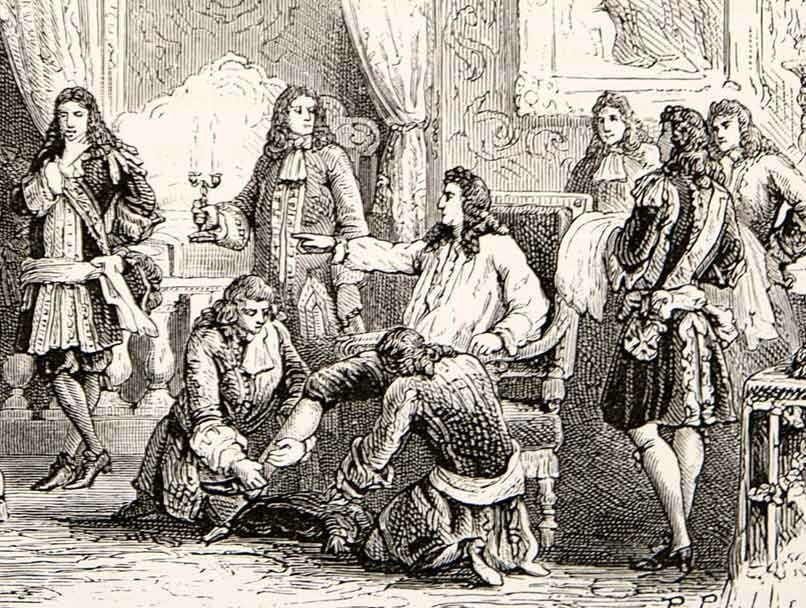
Thus the court became a factory of aristocratic anxiety. Each noble measured his worth by the visible signs of royal favor, and that need to measure everything—proximity, access, attention, hierarchy—produced a constant tension that immobilized any collective impulse. Louis XIV transformed a warlike nobility into a watchful, waiting nobility. He made it courtly, competitive, theatrical. He deprived it of political muscle without needing to destroy it. Or rather, he disarmed it precisely by granting it the thing it desired most: the privilege of remaining close to the sun.
The gardens where even nature obeyed
If the palace interior disciplined the elites, the gardens translated that same logic into landscape. André Le Nôtre did not design at Versailles a mere monumental green space, but a genuine visual doctrine. Nothing there was left to chance. The great axes, the endless perspectives, the parterres, groves, basins, canals, sculptures and fountains: everything was calculated to produce a precise, almost physical impression of absolute order.
These are not natural gardens. They are subdued gardens. Nature appears aligned, trimmed, symmetrical, forced to speak the language of rule and measure. The tree no longer grows: it obeys. The water does not flow: it displays itself. The horizon does not open: it is organized. Even the walk, which appears free, answers to a rigorous dramaturgy. The visitor’s eye does not wander; it is led. Every opening of space, every change of scale, every depth effect, every visual surprise silently repeats the same lesson: here a higher will reigns.
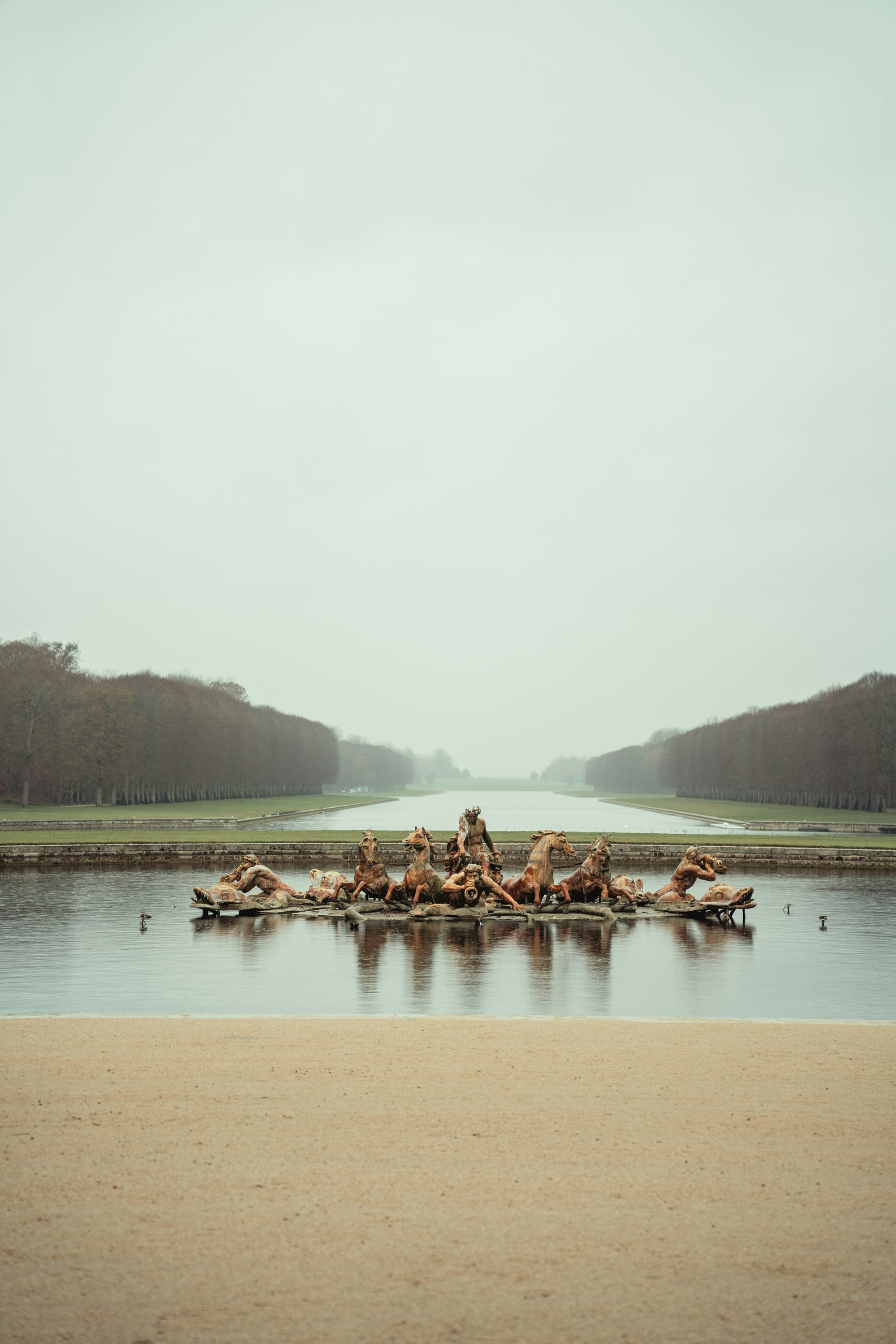
In that sense, the gardens were far more than a beautiful extension of the palace. They were its outward translation. Where the salons taught court hierarchy, the landscape taught the hierarchy of the world. Nature became a political argument. If the king could order trees, water, distances and horizons with such precision, he could also order the kingdom. Versailles thus offered a seductive image of absolutism: power as harmony, domination as beauty, obedience as perfect form.
The geometry of absolutism
At Versailles, politics became visible without proclamations. Power was inscribed in space. The great east-west axis, the nearly infinite extension of perspective, the sequence of basins, avenues and openings, the placing of sculpture, the very logic of movement through the grounds: all compose a scenography meant to fix a center. Not an abstract center, nor a vague idea of the state, but a physical, almost organic center: the king.
The Fountain of Latona is especially revealing. The myth of Apollo and Diana’s mother, humiliated by those who refuse her water and then punished by being transformed into frogs, functioned at Versailles as an almost transparent allegory of rebellion against authority. It was, in a sense, the Fronde turned into classical fable. Disorder, insolence and resistance were inscribed in a narrative in which punishment restored the natural hierarchy of things. Further on, the Fountain of Apollo reinforced the same symbolic logic: the sun god emerges in his chariot as if each dawn in the garden coincided with a new dawn of royal power.
Louis XIV chose the sun as his emblem, and this was no mere heraldic flourish. The sun organizes, illuminates, fertilizes, but also imposes a universal dependence: everything receives its light, everything turns around it, nothing fully escapes its influence. That was exactly the image the monarch wanted to project of himself. Versailles turned that metaphor into a material experience. It did not need to be explained. It was enough to move through its axes, to be carried by its perspectives, to feel how everything converged upon a single focus. The visitor understood with the body, not only with the mind, that the kingdom had been imagined to turn around a single will.
The Hall of Mirrors: propaganda in its purest form
If the gardens formed the great exterior allegory of the system, the Hall of Mirrors was its interior culmination. Conceived by Jules Hardouin-Mansart and decorated by Charles Le Brun between 1678 and 1684, that seventy-three-meter-long gallery was not merely a Baroque marvel nor a masterpiece of courtly taste. It was a machine of political impression. An apparatus designed to produce wonder, fix hierarchy and turn the king’s glory into something almost physically experienced.
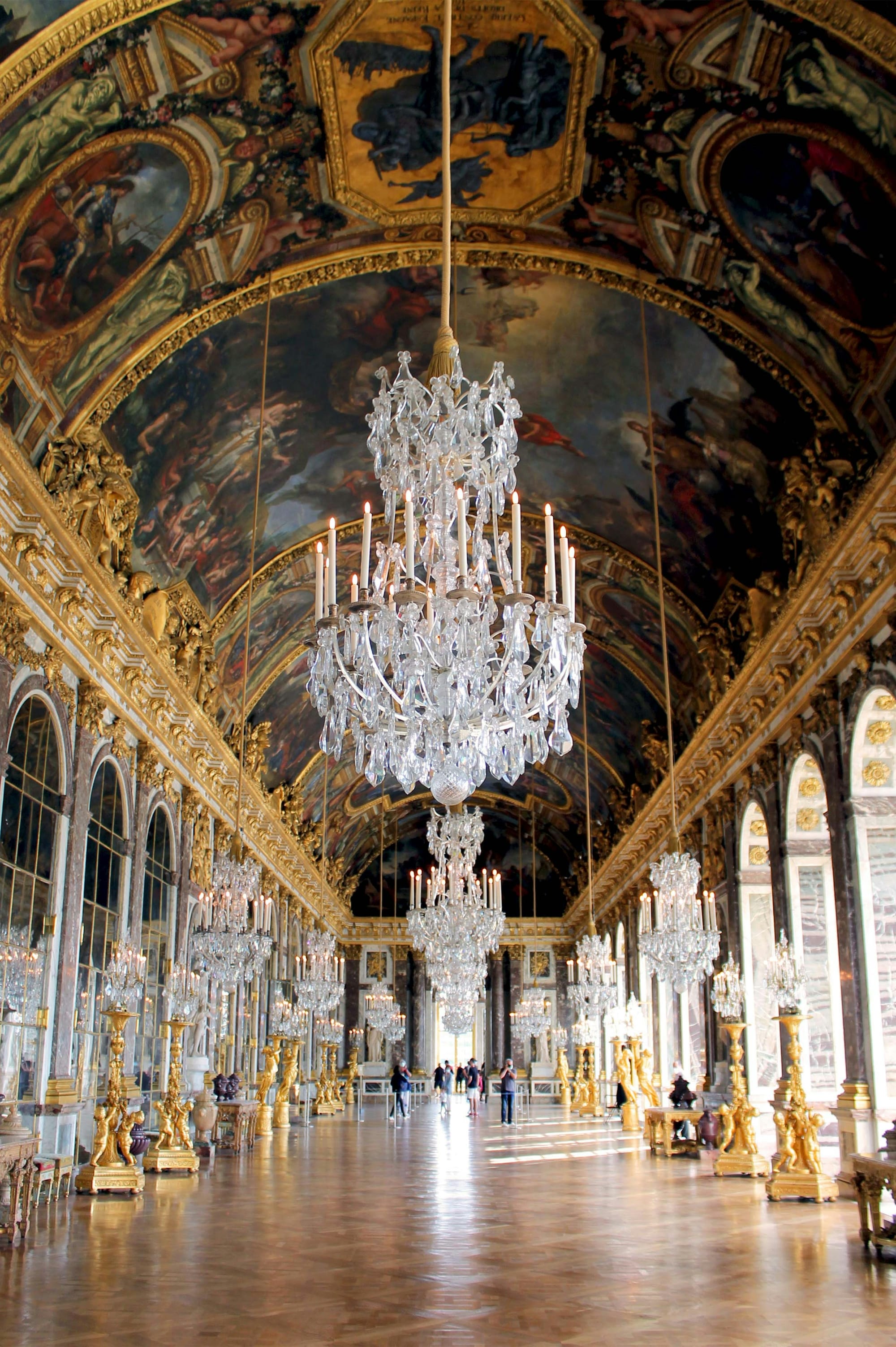
The seventeen windows opening toward the gardens are doubled by the seventeen mirror arches of the opposite wall. Light enters, rebounds, multiplies itself, becomes spectacle. Everything seems designed to abolish shadow and expand the sense of magnificence. The visitor does not simply contemplate royal splendor: he is absorbed by it. He sees himself reflected again and again within the monarch’s universe, as if even his own image had become part of the décor of sovereignty. Above him, the vault unfolds the grand narrative of the reign: victories, treaties, decisions, triumphs—a majesty presented not as aspiration but as evidence.
Nothing there was innocent. Even the mirrors, an exceptional luxury in the seventeenth century, functioned as economic propaganda. France wanted not merely to display wealth, but to prove it could rival Venice, challenge its technical monopoly over glass and appropriate one of Europe’s most refined symbols of luxury. Reflection, too, was power. And at Versailles, as with so many other things, it had first to reflect the king.
The gallery was not merely a room for fêtes, receptions or solemn appearances. It was a declaration of hegemony. An architectural sentence written in glass, light and ambition. There absolutism became the perfect image of itself: brilliant, ordered, expansive, irresistible.
And yet, as often happens with places built to glorify power, history gave it other uses. The very room born to celebrate the supremacy of the French monarchy became, in 1871, the setting for the proclamation of the German Empire after France’s defeat in the Franco-Prussian War. And it was there too that the Treaty of Versailles was signed in 1919, formally ending the First World War while sowing the seeds of new European humiliations. The chamber conceived to exalt Louis XIV ended as a stage for continental revenge, balance and grievance. Rarely has a space shown so clearly that the architecture of power can outlive its owners while failing to control the final meaning of its own history.
The model Europe wanted to copy
Versailles was not merely a palace. It was a language. And Europe understood it very quickly. What fascinated other courts was not only the vastness of its salons, the elegance of its gardens or the brilliance of its ceremonial, but the political effectiveness of the whole. Versailles demonstrated that architecture could cease to be mere backdrop and become an instrument of government. To gather elites around the sovereign, subject them to an unending liturgy, install power within a landscape of perfect order and turn every appearance of the monarch into an act of state: this was the formula that other kings, princes and emperors tried to learn.
It was not, therefore, a matter of copying columns, mirrors or parterres, but of reproducing a grammar of command. In Vienna, St. Petersburg, Madrid, Potsdam and Bavaria, palaces arose that conversed with Versailles in one way or another: some imitated it more explicitly; others absorbed its logic and adapted it to their traditions, climates and dynastic languages. Yet the underlying message was always recognizable. Power could be represented through space and, in being represented, consolidated. The physical distance between sovereign and subjects, the distribution of bodies, the hierarchy of access, the theatricality of the rooms, the visual discipline of the gardens: all of this also governed.
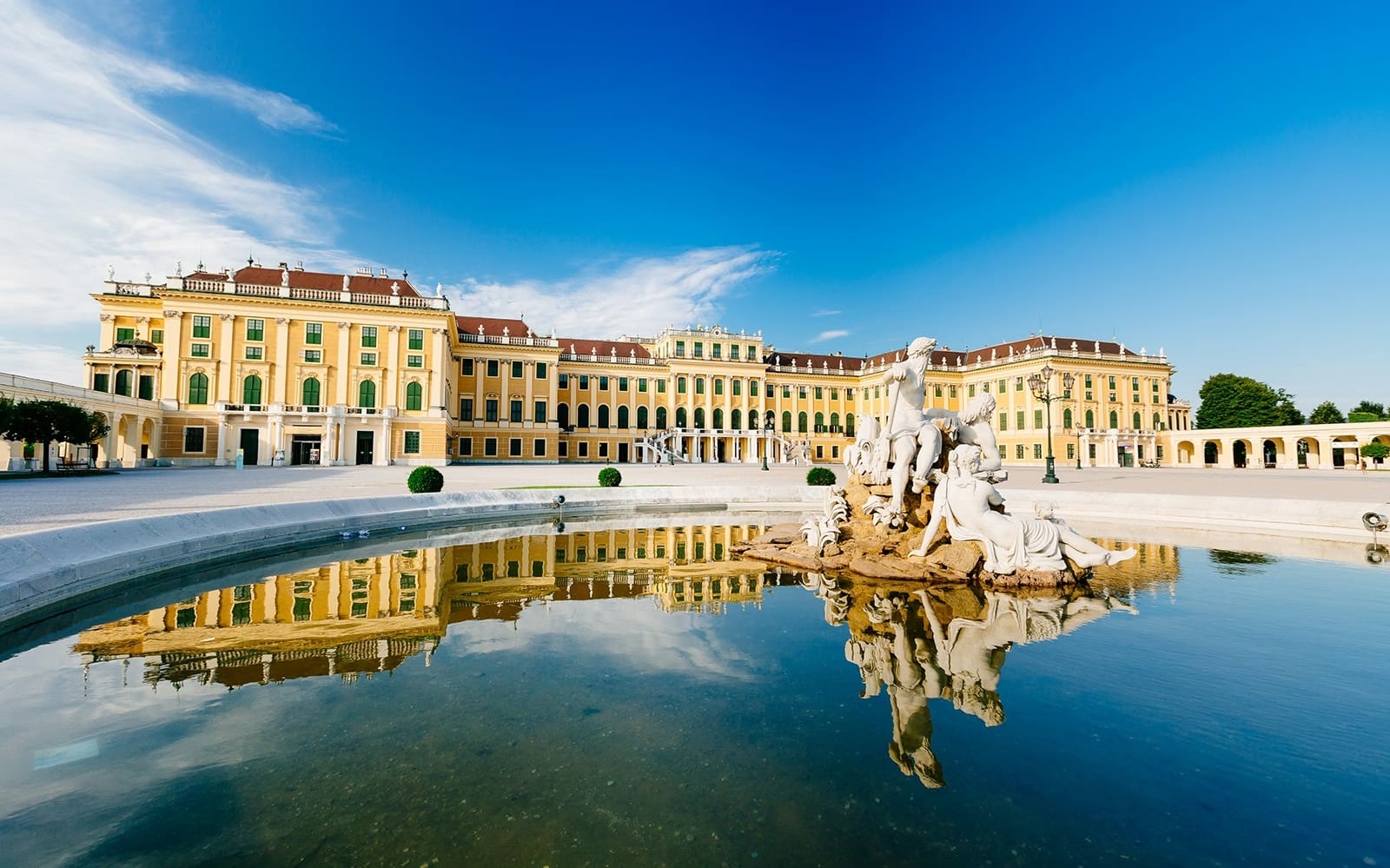
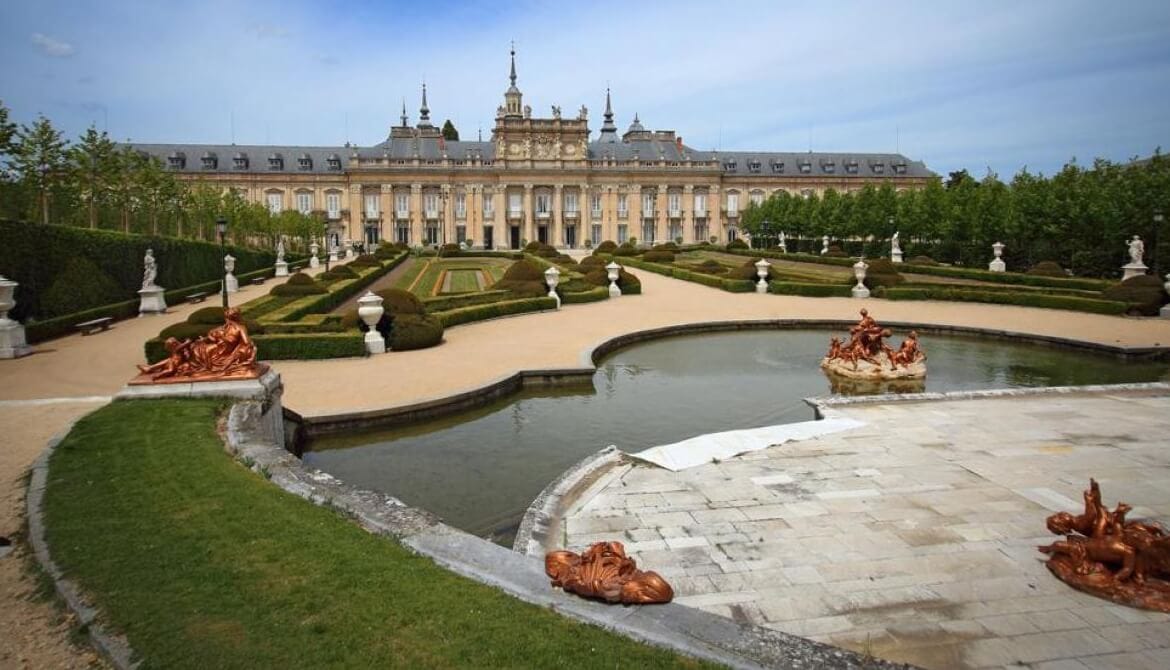
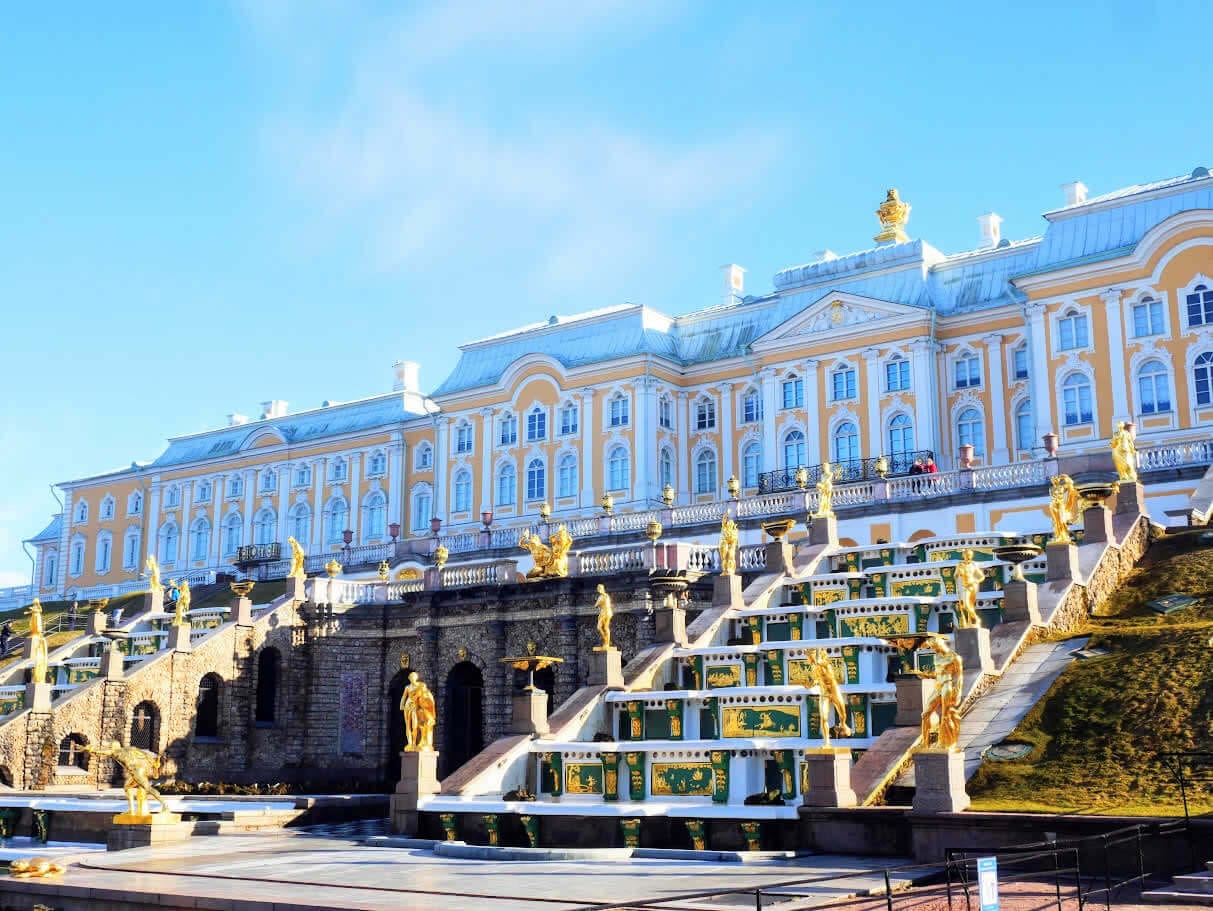
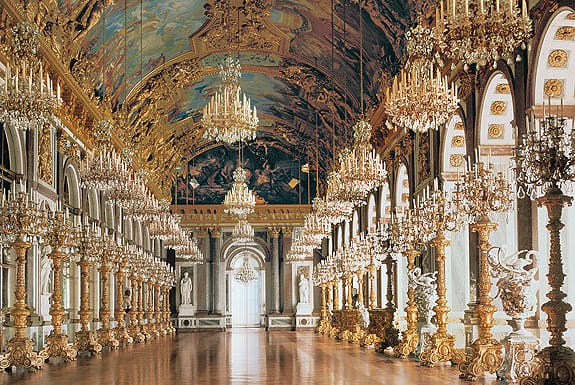
➢ Schönbrunn Palace (Vienna) ➢ La Granja de San Ildefonso (Spain) ➢ Peterhof (St. Petersburg) ➢ Herrenchiemsee or Sanssouci (German sphere / Prussian-Bavarian echo)
Versailles taught Europe that ruling was, in part, the organization of sight. That control did not depend only on armies, decrees or taxes, but also on settings, routes, ritual and perspective. Its greatness lies not only in its beauty, but in its having founded a European pedagogy of command. After Louis XIV, many monarchies wanted not only a great palace, but their own Versailles: a machine of prestige, obedience and representation.
What Europe copied from Versailles
Not just ornament, but a governing logic: centrality, ceremony, visual order, aristocratic proximity, and the palace as a stage for sovereignty.
The price of such magnificence
But no political machinery lasts forever, and still less one so expensive. The Versailles system depended on a fiercely centralized monarchy, an enormously costly court, oppressive taxation and an economy that, despite the reforming efforts of Colbert and others, could not bear the weight of glory without injury. France remained a largely rural country, vulnerable to bad harvests, devastating winters, subsistence crises and a scandalous inequality between privileged orders and the common people.
While nobles fought over precedence and artists glorified the king’s majesty, millions of French men and women lived under the combined pressure of hunger, taxes and precarity. That fracture was not always visible from Versailles—or it was seen distorted by distance, softened by protocol, dissolved in court choreography. The palace could order the aristocracy, but it could not repair the country that sustained that order. And there lay its great fragility: it had domesticated the elites, but it had not reconciled the kingdom with itself.
The contradiction grew harder and harder to conceal. The court could enchant foreign ambassadors, inspire admiration across Europe, turn French grandeur into a dazzling experience. But it could not feed itself on mirrors. Beneath the geometric perfection of the system there still beat a far less harmonious reality: a state burdened by expense, a deeply unequal society, and an ever more offensive distance between the brilliance of power and the real lives of its subjects.
When hunger reached Versailles
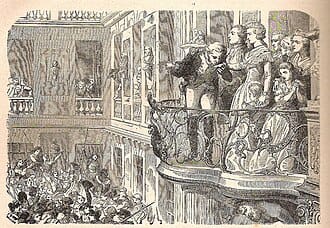
The final scene of the old order did not begin with a treaty, a great battle or even a palace conspiracy. It began with an elemental need: bread. In October 1789, when the Revolution had only just begun to crack the political edifice of the Ancien Régime, it was the women of the Paris markets who set out. They protested scarcity, the unbearable price of bread, a misery that no longer tolerated any distance between those who governed and those who suffered.
The March on Versailles was, in that sense, the palace’s counter-spell. For more than a century, the monarchy had tried to keep Paris at a prudent political distance, as if space itself could shield power from the disorder of the city. But now Paris advanced upon the very symbol of that separation. The crowd did not come to admire the gardens or surrender before the architecture. It came to demand food, accountability and presence. It came, in essence, to destroy the fiction that power could remain isolated within its own scenography while the kingdom disintegrated outside its gates.
When the demonstrators stormed the palace and finally forced the king and the royal family to return to Paris, more than a residence was emptied out. The very logic that had given Versailles its meaning since Louis XIV was broken. The palace that had been designed to concentrate and protect the heart of power discovered, suddenly, that no décor was any longer strong enough to contain history.
The day the machine broke
There lies Versailles’ great paradox. For more than a century it functioned as one of the most sophisticated political machines ever built. It domesticated the nobility, imposed a center, symbolically ordered the world, made the monarch an almost ubiquitous presence and turned etiquette into a mode of government. It made obedience look like elegance, dependence like privilege, submission like the honor of being near. But it could not withstand what remained outside its salons: hunger, financial crisis, the discrediting of absolutism, the fracture between the representation of power and the material truth of the country.
The October march of 1789 was the perfect inversion of Louis XIV’s project. The king who had wished to remove power from Paris in order to preserve it from the city ended by returning there under pressure from the people. The aristocracy drawn to Versailles as to a sanctuary became part of the visible wreckage of an exhausted world. The building conceived to consolidate absolute monarchy turned, over time, into a museum of its disappearance.
Versailles ceased, then, to be a capital and became memory. It was no longer the place where the kingdom’s fate was decided, but the place from which one could read, with almost cruel clarity, how that regime had worked and why it had broken. The palace survived. The political logic that had raised it did not.
The palace that still explains how power works
Today, millions of visitors move through Versailles with the sensation of entering a petrified dream. They see grandeur, refinement, brilliance, engineering, the triumph of French art, the almost insolent ability of power to turn stone into spectacle. All of that remains there, intact in its seduction. But what is most fascinating about the palace is not only what it shows, but what it reveals.
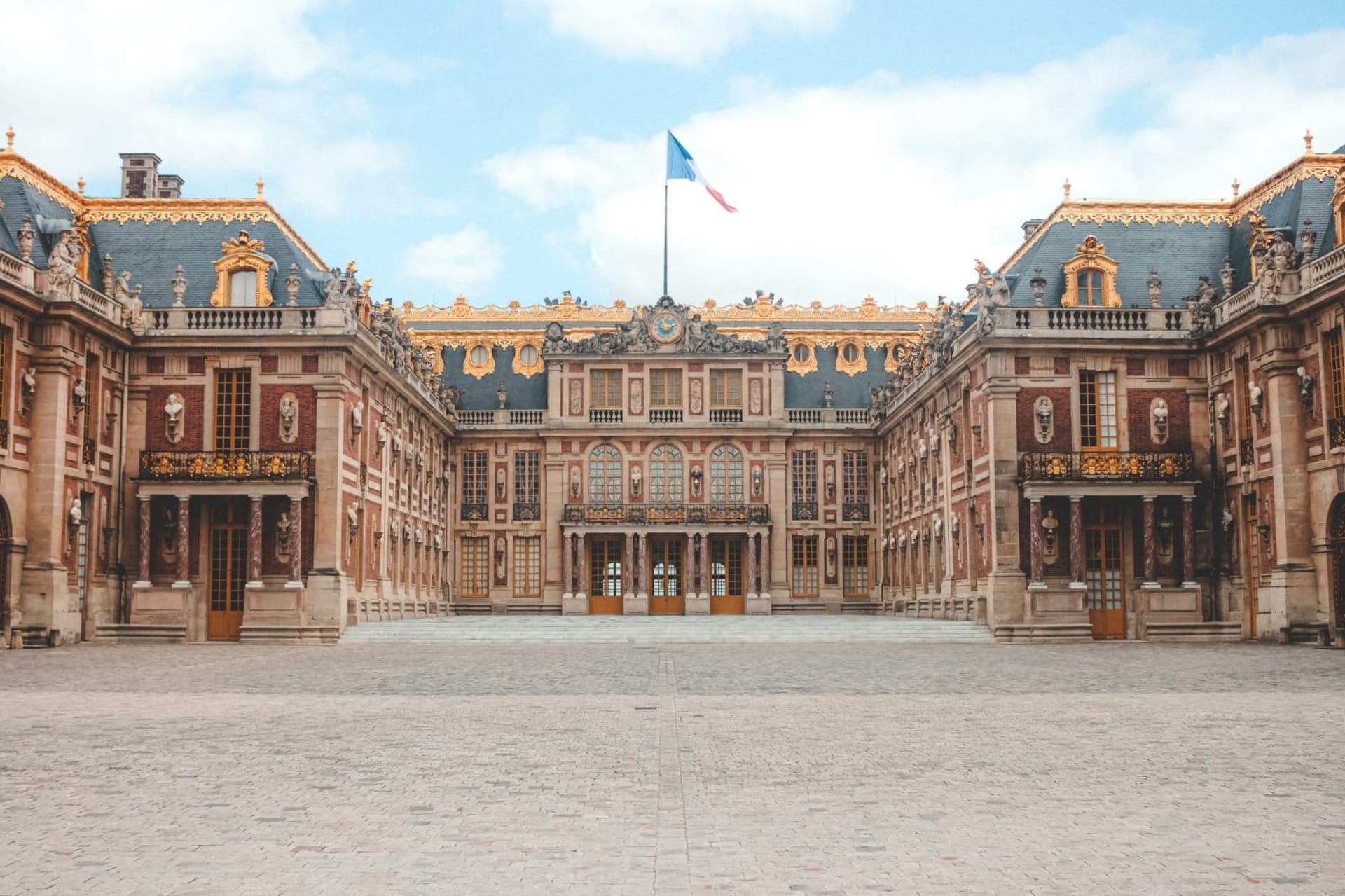
It reveals that power rarely presents itself naked. It prefers spectacle to explicit threat, liturgy to shouting, beauty to rawness. It prefers to persuade rather than strike, to dazzle rather than explain, to invite rather than expel. It prefers that those around it desire the closeness they will later fear to lose. Versailles was exactly that: a system in which domination was exercised not only through orders, but through scenes; not only through laws, but through décor; not only from the throne, but from the very organization of space.
That may be why it still feels modern. Because behind its mirrors, statues and perfect gardens, Versailles speaks not only of the seventeenth century or of Louis XIV’s political genius. It speaks of a more enduring truth: that the most effective power does not always need visible walls. Sometimes it builds salons. Sometimes it designs routes. Sometimes it turns proximity into reward and dependence into aspiration. Sometimes it manages to make obedience seem not like a surrender, but like a privilege.
And then domination ceases to look like a chain. It begins to look like an honor.