
Alhambra: ARCHITECTURE OF POWER
How a 13th-century palatine city transformed space, water, and geometry into a sophisticated system of governance

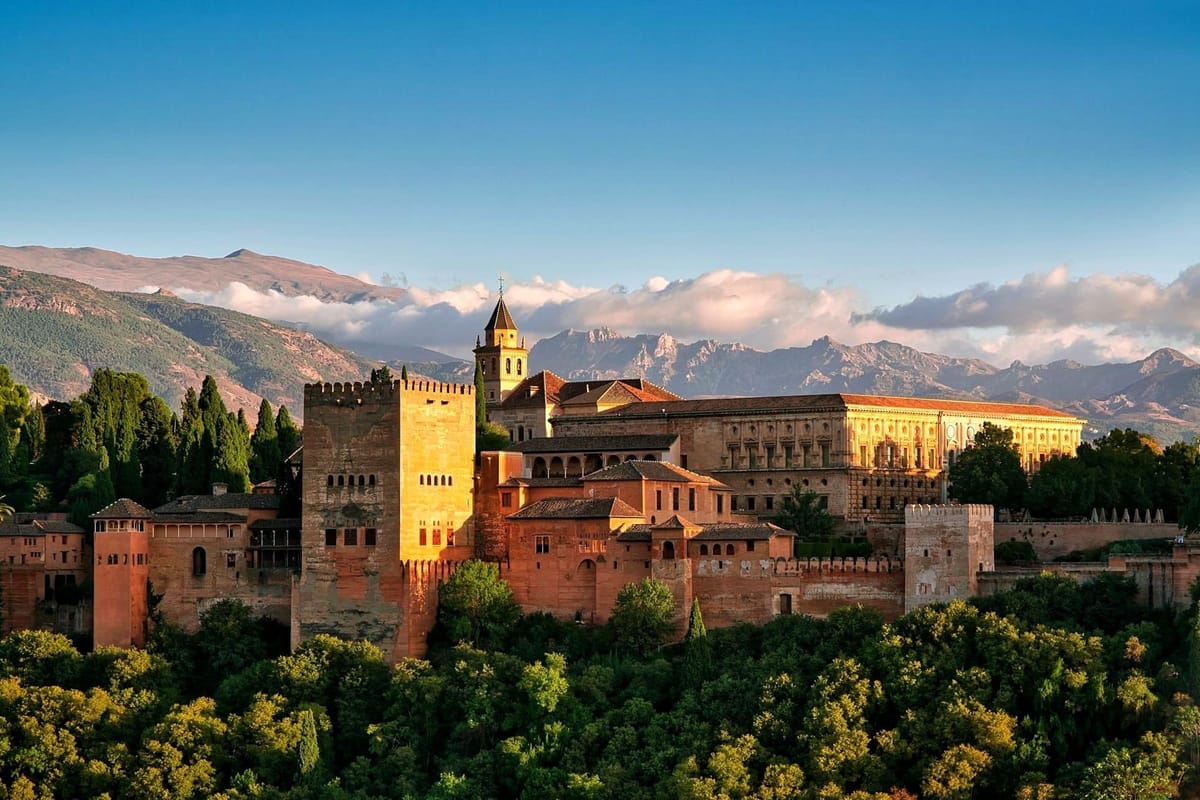
The Alhambra rises on the Sabika hill as the result of a decision that belongs more to the realm of politics than to that of architecture. Its origin cannot be understood without considering the historical moment in which it emerged: the 13th century, when al-Andalus was entering its final phase and the Iberian map was being reshaped by the steady advance of the Christian kingdoms.
Following the fall of key cities such as Córdoba and Seville, Muslim-controlled territory gradually shrank until it became concentrated in the south. In this context of instability, the Nasrid Kingdom of Granada managed to consolidate itself as the last Islamic political entity on the Iberian Peninsula.
It is within this framework that Muhammad I ibn Nasr emerges. Around 1238, he founded the Nasrid dynasty and made a decision that would define the structure of power in Granada for more than two centuries. The choice of the Sabika hill was not driven by aesthetic impulse—despite its undeniable landscape qualities—but by a precise reading of the territory.
The hill provided elevation, natural defense, and a commanding position over the city and its immediate surroundings. From there, the fertile Vega of Granada—one of the most productive agricultural areas in southern Iberia, essential to the kingdom’s economic stability—could be controlled. Access routes and territorial movements could also be monitored. In an era when information depended on direct observation, visual dominance was equivalent to power.
Yet the decision extended beyond military strategy. What began on the Sabika hill was not merely a fortified residence, but a space designed to organize power in all its dimensions. The Alhambra was conceived as a system: a place from which to govern, administer resources, project authority, and, at the same time, ensure the security of the court.
From its very origin, it stands as the material expression of a complex balance: maintaining control without constant display, sustaining power without dissolving it into the city, structuring governance through both defense and internal organization.
Within this initial logic lies the key to everything that followed.
The Sabika hill: strategic positioning in Nasrid Granada
The choice of the Sabika hill introduces a principle that runs through the entire construction of the Alhambra: power must be situated. Not just anywhere, but in a place that allows for observation, anticipation, and organization.
From this elevation, the view dominates the Vega of Granada, crucial for sustaining the kingdom’s economy. It also reaches the access routes, natural passages, and the margins from which any threat might emerge.
In the medieval context, such observational capacity was far from trivial. Without rapid communication networks or centralized administrative structures, information relied heavily on visibility. Controlling elevation meant reducing uncertainty. It meant turning the landscape into a readable map.
The Sabika made this possible. It transformed the surrounding environment into a space that could be understood—and therefore governed. The Alhambra interpreted what occurred beyond its walls. Every movement in the Vega, every passage along the roads, every shift on the horizon could be read from its dominant position.
But there is another dimension, less visible yet perhaps more decisive. The location was not only strategic—it was also deliberate in its separation. Unlike other medieval cities where power is embedded within the urban fabric, here a clear distance is established from Granada itself. The Nasrid court does not physically belong to the city; it observes it from outside, from above.
That distance redefines the relationship between rulers and ruled. It introduces a visible, constant hierarchy. The Alhambra does not need grand gestures to assert authority. Its position alone establishes order. It dominates the horizon, shapes the landscape, and conditions how the territory is perceived.
In this context, governing is not only about administration or defense. It is about occupying the precise place from which everything else acquires meaning.
A palatine city
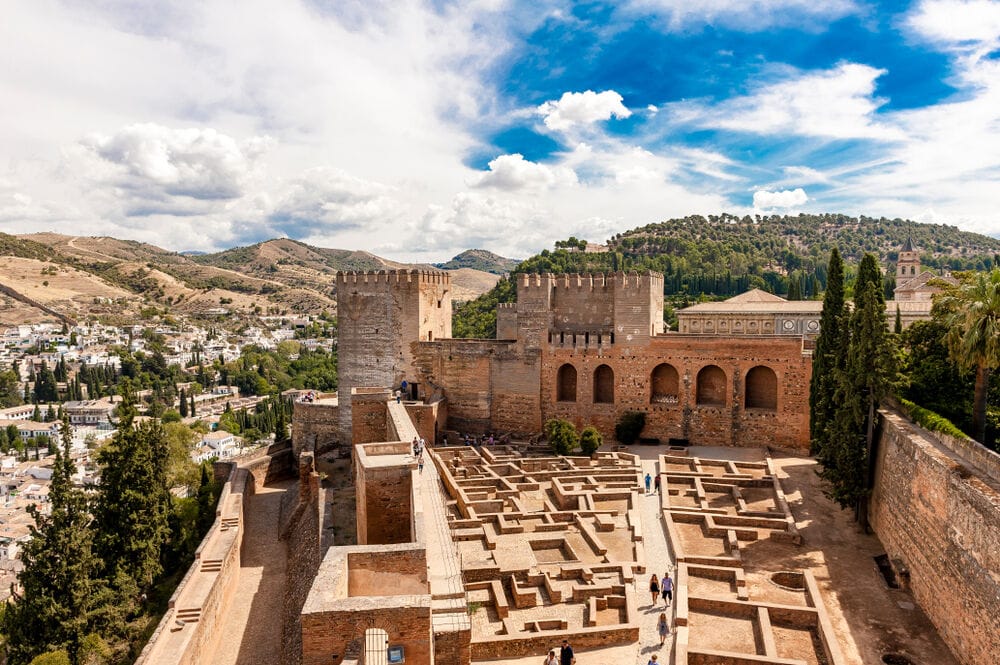
To think of the Alhambra merely as a collection of palaces is to overlook its true nature. What developed within its walls was a fully functioning palatine city, designed to sustain the continuous political, administrative, and domestic life of the Nasrid court—a complete urban organism.
At its peak, the enclosure housed several thousand inhabitants. The ruling elite lived there, but so did a complex network of officials, scribes, specialized artisans, soldiers, and servants who ensured the system’s daily operation.
There were houses organized around interior courtyards, workshops producing essential goods, storage facilities, public baths (hammams) serving both hygienic and social functions, and administrative spaces where decisions were made and governance was articulated. All of this was connected through a network of narrow streets and winding paths, closer to the structure of an اسلامی medina than to the geometric planning of contemporary Christian cities.
This self-sufficiency provided not only comfort but security. In a politically unstable environment, reducing dependence on the outside world was a form of protection. The Alhambra could sustain its activity even under threat, ensuring the continuity of power without interruption.
Daily life, in this sense, was not secondary. It was structural. The stability of the Nasrid kingdom depended not only on military or diplomatic capacity, but also on the ability to organize life within its walls with efficiency and coherence.
Here, architecture ceases to be mere construction and becomes an instrument of order. It defines how space is inhabited, how movement occurs, how work is organized—and ultimately, how power is sustained.
The Alhambra as a sequence
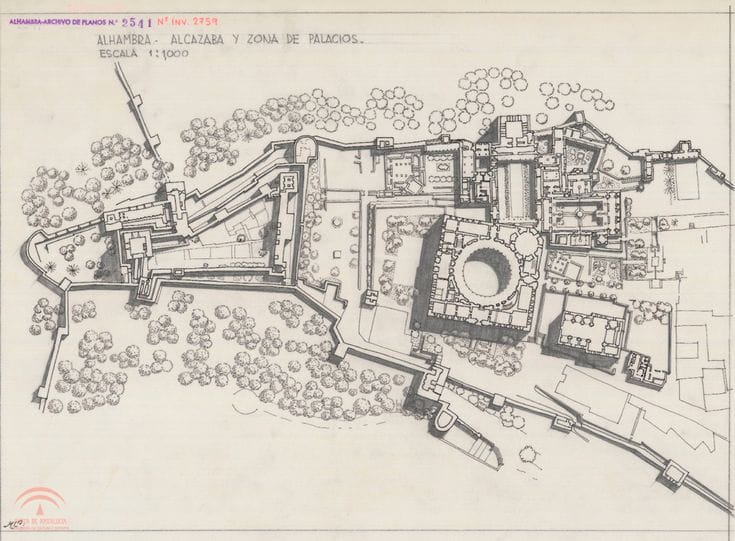
One of the most distinctive features of the Alhambra lies in the way it is experienced. In contrast to Western monumental architecture—designed to be understood at a glance, structured through grand axes and open perspectives—the space here is built through fragmentation.
Access is never direct. Doorways bend, corridors turn, spaces unfold without revealing what comes next. Light does not enter uniformly; it appears and disappears, creating constant contrasts between shadow and brightness. The complex does not present itself as a complete image, but as a sequence.
This organization has deep roots in Islamic urban tradition, where privacy and control of visibility are essential. In the Alhambra, however, this logic is taken further. It is not only about protecting intimacy, but about structuring the experience of those who move through it.
Every movement is conditioned. The visitor—whether a foreign ambassador, a court official, or any authorized figure—advances according to a rhythm they do not control. Architecture imposes pauses, directs attention, limits visibility, and determines when and how each space is revealed.
This sequential character turns the journey into a form of representation. There is no immediate impact, but rather a gradual accumulation of impressions. A courtyard cannot be understood without the path that leads to it; a hall gains meaning through the transition that precedes it.
Each opening, each room, each shift in light corresponds to a precise moment within a carefully constructed experience. Architecture ceases to be static and becomes a process—a way of guiding perception and, with it, interpretation.
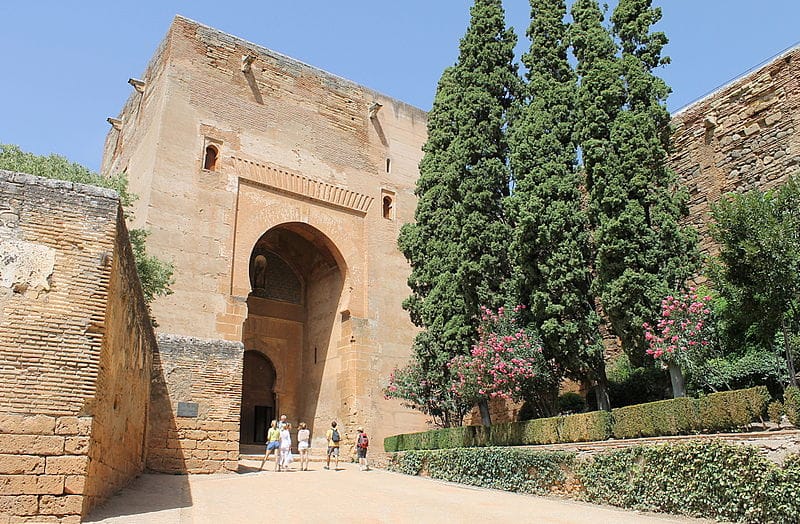
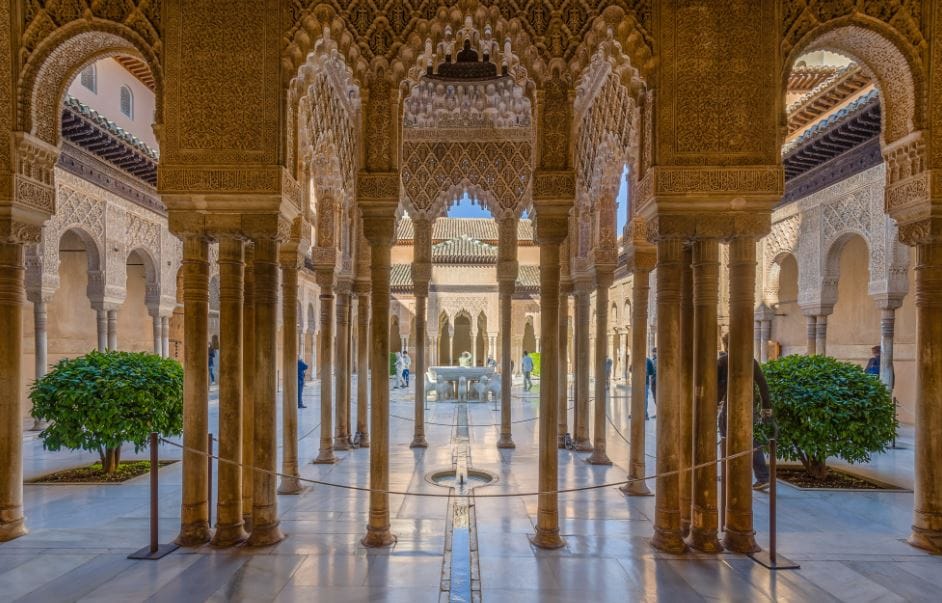
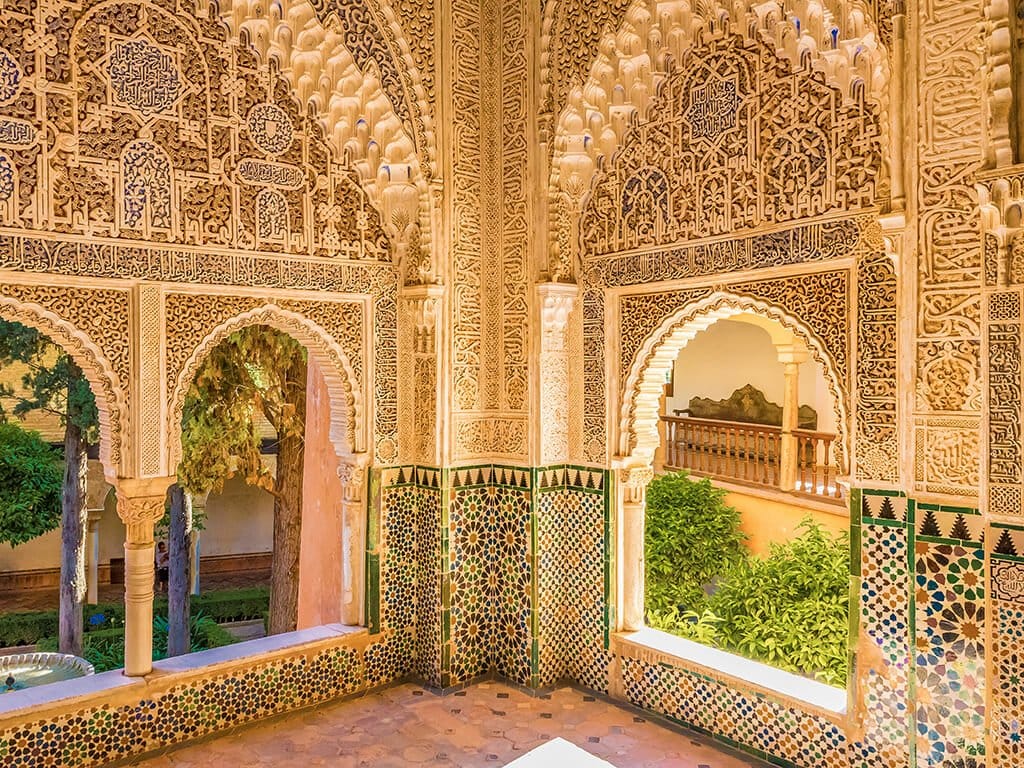
The Alhambra unfolds through turns, thresholds, and controlled revelation. Space is never given all at once.
Water as an ordering principle
The hydraulic system of the Alhambra stands as one of its most sophisticated technical achievements and one of the clearest expressions of how it functions. Far from being a secondary feature, water is an essential infrastructure that sustains life within the complex and structures much of its spatial logic.
At the core of this system is the Royal Canal (Acequia Real), an engineering work that diverts water from the Darro River and carries it across several kilometers to the Sabika hill. Maintaining a constant flow at such elevation required not only technical knowledge but precise planning of terrain, gradients, and internal distribution. The result is a hydraulic network capable of continuously supplying the entire palatine city.
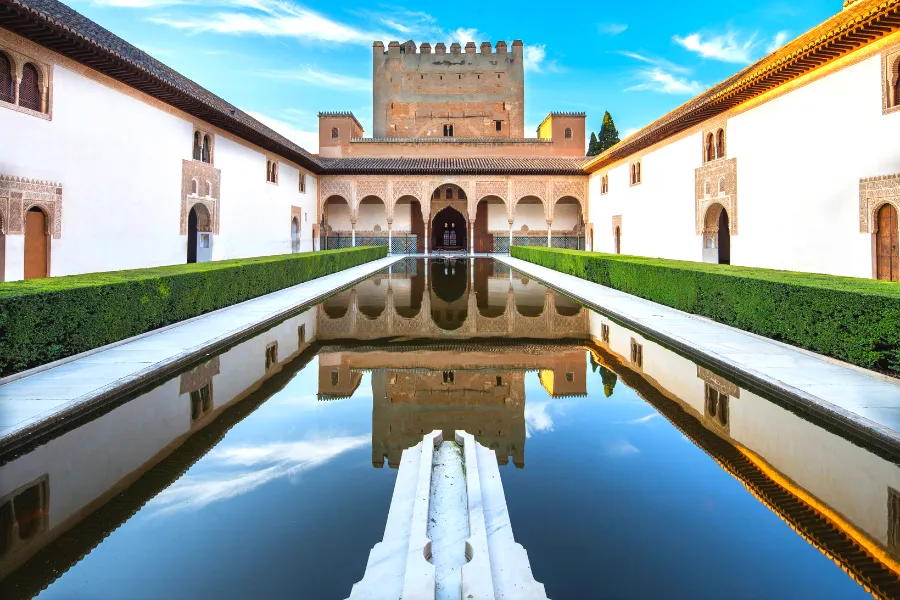
Functionally, water plays a fundamental role. It irrigates gardens and orchards, provides for daily use, and regulates temperature in a climate marked by dry summers and high heat. Its presence creates more habitable microclimates in courtyards and interiors, softening environmental conditions.
But its role goes beyond utility. Water introduces a symbolic dimension deeply rooted in Islamic tradition. The irrigated garden is not only a place of cultivation or rest—it evokes the paradise described in the Qur’an, a space where water flows in ordered abundance.
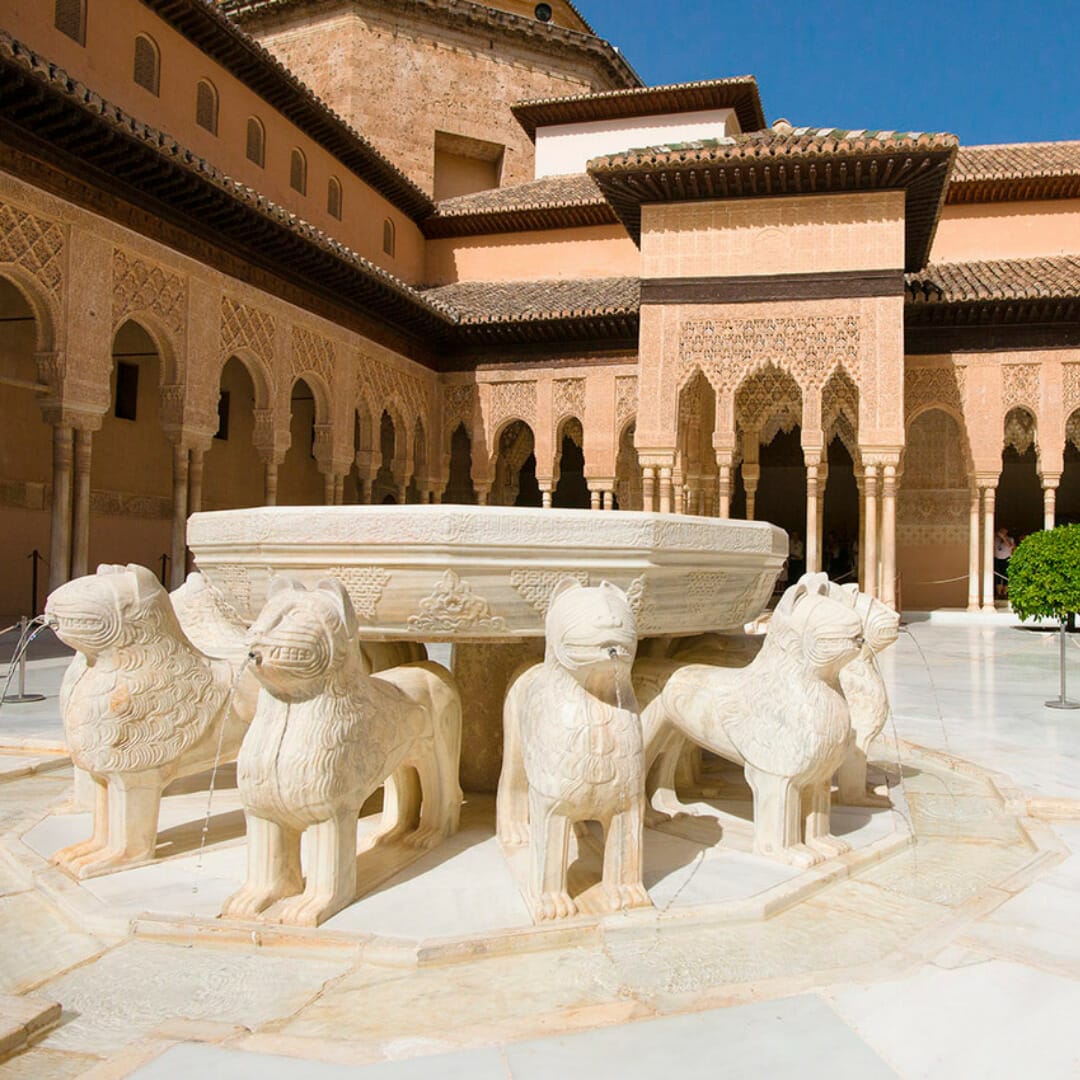
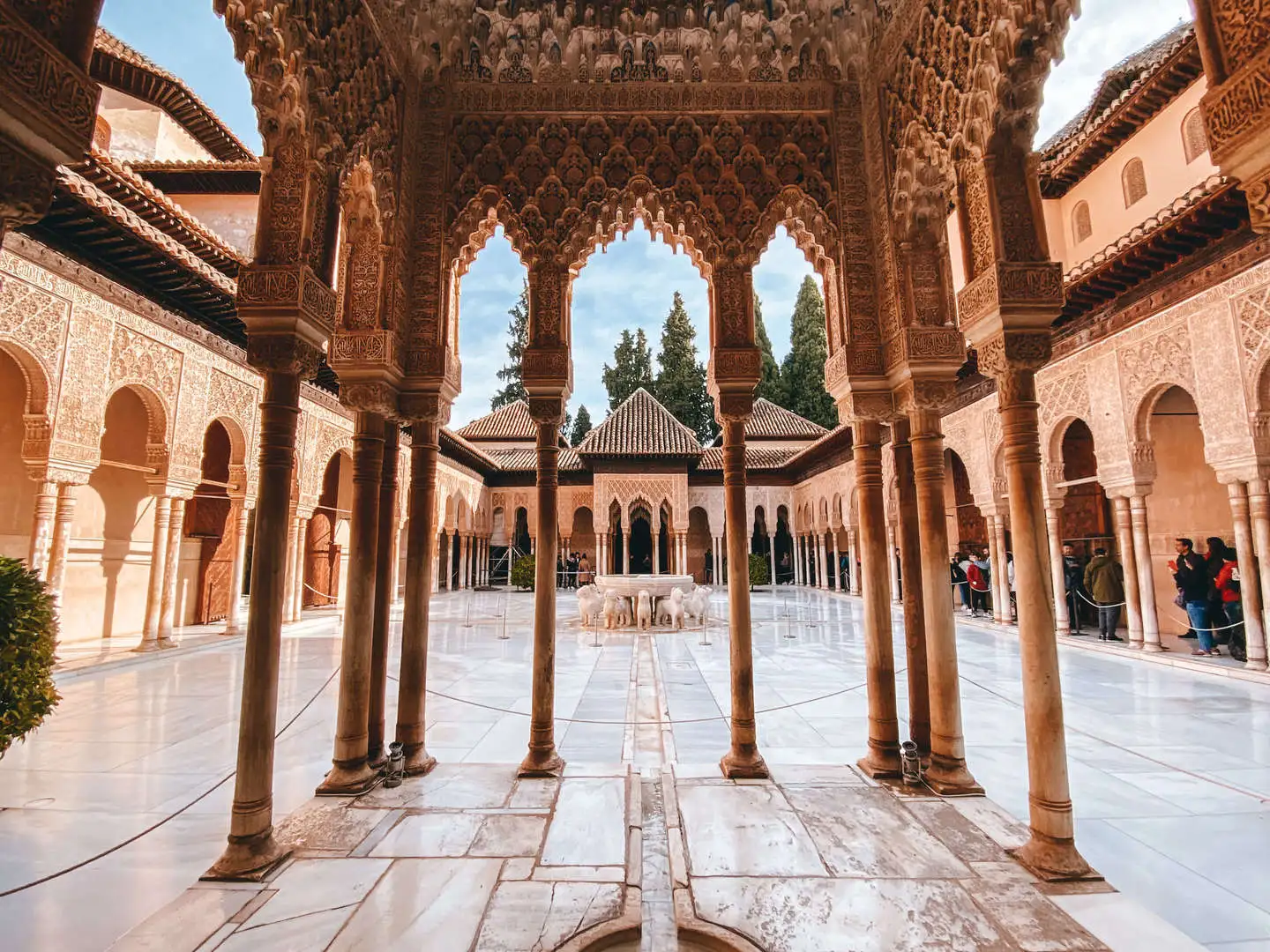
In the Court of the Lions, this idea is translated into spatial organization. A central fountain distributes water through four channels that structure the courtyard and reference the rivers of paradise. This is not merely aesthetic—it is a way of imposing order through a recognizable principle.
In the Generalife, water takes on a different meaning. It becomes associated with retreat, rest, and a more intimate experience of space. The gardens, crossed by channels and fountains, create an environment designed for contemplation and distance from the more formal functions of the palatine city.
Taken as a whole, water is not decorative. It is structural—connecting technology, landscape, and meaning. It is, at once, resource, tool, and language.
War outside, refinement within
From the outside, the Alhambra presents a restrained, almost austere image. Its earthen walls and towers reveal little of the complexity within. There is no intention of display in this first impression. What prevails is defensive logic: protection, resistance, control.
The Alcazaba concentrates this military function. Its towers—such as the Torre de la Vela or the Torre del Homenaje—rise as permanent surveillance points over the territory. From them, access routes were monitored, movements anticipated, and response capacity ensured.
Yet once that outer boundary is crossed, perception shifts completely. The interior unfolds a radically different language. Solidity gives way to lightness; exterior restraint transforms into meticulous ornamental complexity. Materials such as plaster, wood, and ceramic—relatively modest in cost—allow for extraordinary levels of detail.
Plasterwork covers walls, arches, and vaults with dense layers of geometric patterns, vegetal motifs, and Arabic inscriptions. Many repeat the Nasrid motto: “Only God is victorious.” This is not neutral decoration—it is a message embedded within the architecture, repeated continuously, reinforcing the ideological foundation of power.
This contrast between exterior and interior is deliberate. It reflects a precise conception of how power should be expressed: outwardly, as defense and control; inwardly, as refinement, knowledge, and cultural legitimacy.
The Alhambra thus articulates two complementary levels of power—one visible from afar, tied to strength, and another revealed only upon entering, expressed through detail, repetition, and meaning.
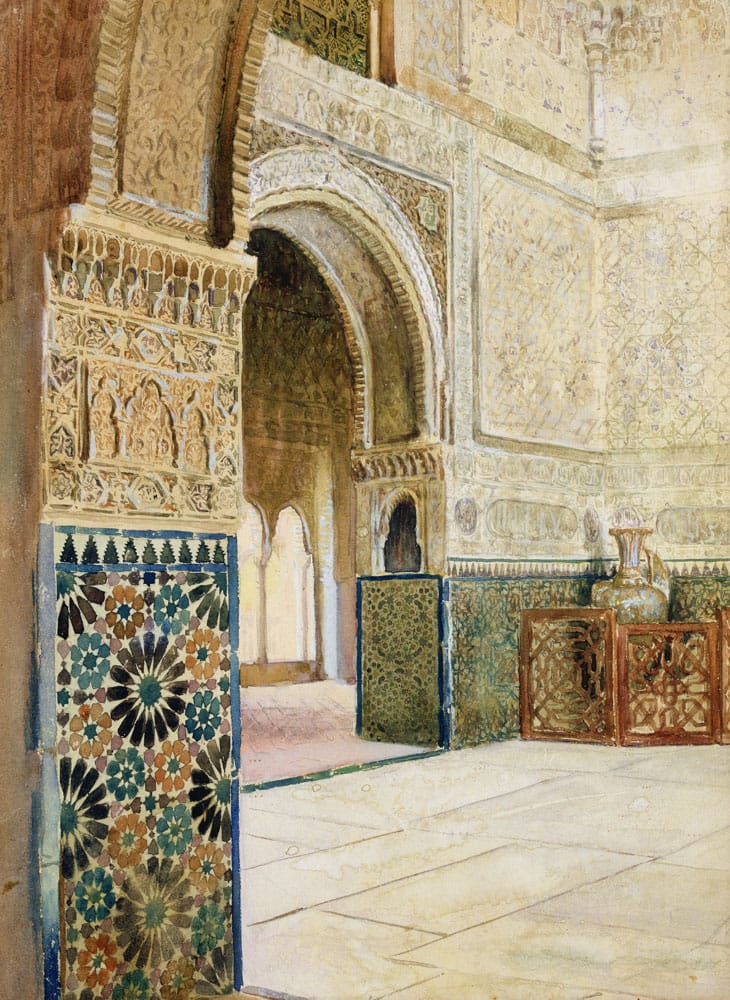
Beyond the walls, the Alhambra speaks another language - one of inscription, geometry, and cultural legitimacy.
Geometry as a language of power
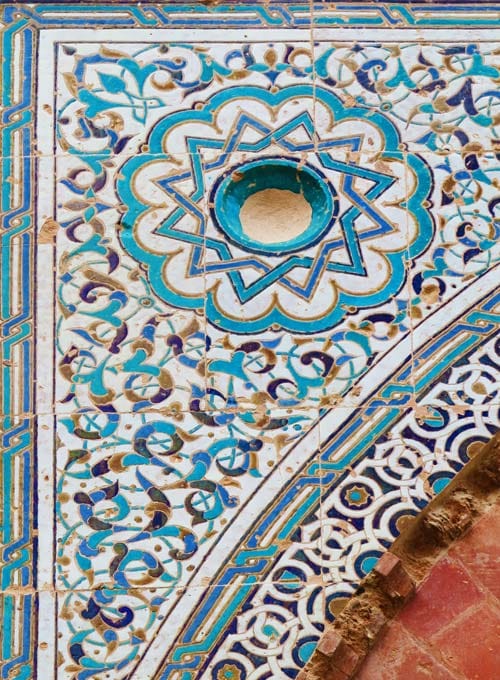
The decoration of the Alhambra is not the result of accumulation or mere aesthetic impulse. Beneath every surface lies a rigorous system—a logic that organizes space through precise mathematical principles. What appears as visual richness is, in fact, structure.
The geometric patterns covering walls, ceilings, and floors reflect advanced knowledge of symmetry, proportion, and repetition. Nasrid artisans worked with a precision that today is associated with the 17 crystallographic groups—a system not formally defined until centuries later. In the Alhambra, this knowledge is not theoretical; it is built directly into matter.
This applied geometry serves multiple functions. It organizes space visually, creating rhythms that guide perception and establish subtle hierarchies between surfaces. At the same time, it introduces a sense of continuity that dissolves the idea of limits: patterns do not appear to end, but to extend beyond what is visible.
The absence of figurative representation—characteristic of Islamic art in religious and palatine contexts—is not a restriction, but a starting point. By removing the human figure, visual language shifts toward abstraction, exploring pure form, repetition, and infinite variation.
The result is a decorative system that does not seek to narrate or represent reality, but to structure it through logic. Each motif follows a rule, each composition a proportion, each surface an internal order.
In this context, geometry ceases to be ornamental and becomes a tool of thought. It does not embellish space—it organizes, articulates, and gives it coherence.
Why the Alhambra is mathematically exceptional
The decorative systems of the Alhambra are based on advanced geometric structures built through symmetry, proportion, repetition, and variation. Many scholars point out that its surfaces anticipate the full range of planar symmetry groups later formalized by modern mathematics. What appears ornamental is, in fact, highly ordered design.
1492: when power changed hands
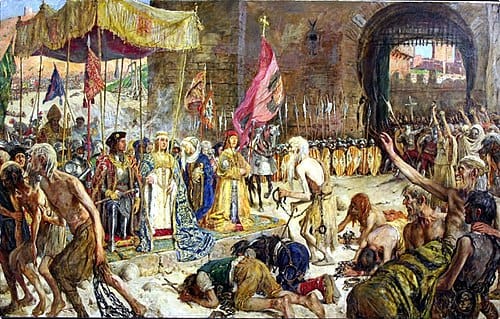
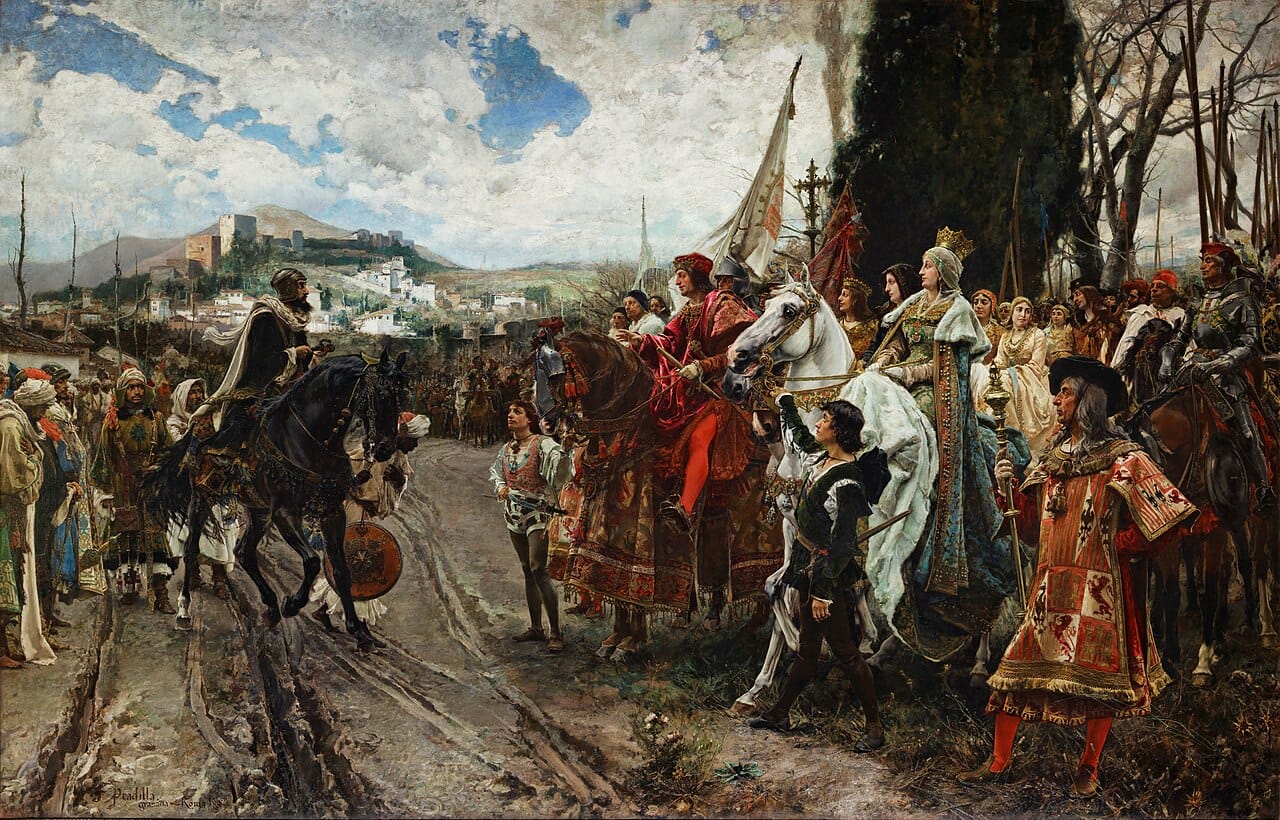
The conquest of Granada in 1492 by the Catholic Monarchs marked the end of the Nasrid Kingdom and the final political chapter of al-Andalus. Yet this moment did not signify the disappearance of the Alhambra. Unlike other conquered cities where previous architecture was replaced or erased, a different decision was made here: preservation and reuse.
The new rulers recognized not only the strategic value of the site, but also its functionality as a seat of power. They established a royal residence within the complex and began a process of adaptation that, rather than erasing what existed, introduced gradual modifications. This continuity allowed much of the Nasrid complex to survive—a rare outcome in transitions of this scale.
The transformation became more visible in the 16th century under Charles V. His decision to build a Renaissance palace within the enclosure introduced a new architectural language based on axial order, symmetry, and monumentality. The building, with its circular plan inscribed within a square, contrasts sharply with the fragmented and intimate scale of Nasrid spaces.
This contrast does not imply replacement, but superimposition. The Alhambra becomes a place where two conceptions of power coexist: one based on sequence, intimacy, and controlled movement; the other on centrality, classical proportion, and direct representation.
Rather than canceling each other out, both remain inscribed within the same space. This coexistence turns the Alhambra into an exceptional architectural document, where historical change does not erase the past, but layers itself upon it.
From abandonment to myth: the romantic reinvention
After centuries of continued use under the Castilian monarchy, the Alhambra gradually entered a period of neglect that threatened its survival. During the 17th and 18th centuries, it lost political and administrative centrality. Some areas deteriorated, others were reused without preservation criteria, and lack of maintenance accelerated its decay.
The most critical moment came during the Napoleonic occupation in the early 19th century. French troops used the Alhambra as a military site and, upon retreat, placed explosives with the intention of destroying parts of the complex. Only the intervention of a soldier who defused the charges prevented greater destruction. Even so, the damage was significant.
The turning point came shortly afterward, in a completely different context. The 19th century brought the rise of Romanticism, a cultural movement that turned its gaze toward the past, the exotic, and the decayed. Within this framework, the Alhambra ceased to be seen as a functional ruin and became an object of fascination.
European travelers, artists, and writers arrived in Granada drawn by the image of a place suspended in time. Among them, Washington Irving played a decisive role. His Tales of the Alhambra did not merely describe the site—they constructed an imaginary around it, blending history, legend, and Romantic sensibility.
From that moment on, the Alhambra’s meaning changed definitively. It ceased to be a center of political power and became an international cultural reference. The gaze upon it shifted—from that of rulers and strategists to that of observers seeking a connection with the past.
This change did not diminish its relevance. On the contrary, it opened a new form of permanence.
The Alhambra today
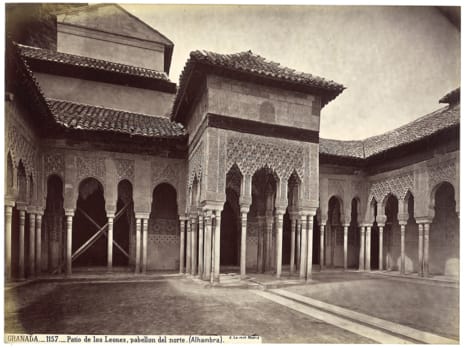
Today, the Alhambra stands as one of the most visited monuments in Europe, receiving more than two million visitors annually. This massive influx has profoundly transformed its operation, requiring a management model that balances accessibility, conservation, and control.
The challenge is considerable. The fragility of many elements—particularly plasterwork, wooden structures, and original pavements—demands strict limitations on continuous foot traffic. At the same time, its status as a global cultural symbol makes it an essential destination within the international tourism circuit.
To maintain this balance, the site operates through a highly regulated system. Entry times are scheduled, routes are defined, and visitor flows are carefully distributed to prevent overcrowding in sensitive areas such as the Nasrid Palaces. The experience, in this sense, is not entirely free—it is designed.
This model introduces a significant transformation in the nature of the site. The power that organizes the Alhambra no longer responds to military or political needs, but to logistical, heritage, and cultural criteria. It is about managing time, movement, and density within a historical space never intended to accommodate millions.
And yet, there is a clear continuity. The Alhambra still functions as a system. It continues to organize movement, establish rhythms, and shape the experience of those who pass through it. What has changed is not its internal logic, but the context in which it operates.
Where access to power was once regulated, access to heritage is now managed.
What endures
Throughout its history, the Alhambra has taken on many forms: a fortress on a frontier, a functioning palatine city, a royal residence after Christian conquest, a neglected structure in times of decline, and ultimately a global cultural monument. Each phase has reshaped its use, its meaning, and how it has been perceived.
And yet, beneath these changes, a remarkable coherence remains. It does not depend on a specific function or historical moment, but on something deeper: the logic with which it was conceived. The organization of space, the management of movement, the relationship between light, water, and architecture continue to operate with a precision that has not lost relevance.
Anyone who walks through its courtyards and halls today experiences, in essence, the same principle that structured life in the Nasrid period: a carefully ordered sequence, where each space responds to a rhythm and an intention. The Alhambra does not simply present itself—it still shapes how it is traversed, observed, and ultimately understood.
It is not merely a remnant of the past. It is an active structure, capable of organizing perception and giving meaning to experience even beyond its original context. Its architecture has not been frozen as a historical object—it continues to function as a system.
And in that continuity lies its uniqueness: having turned architecture into a form of governance that does not depend on time to remain legible.
The Alhambra does not tell the story of power. It builds it, organizes it, and leaves it there—intact—for those who know how to read it.


